Product Description
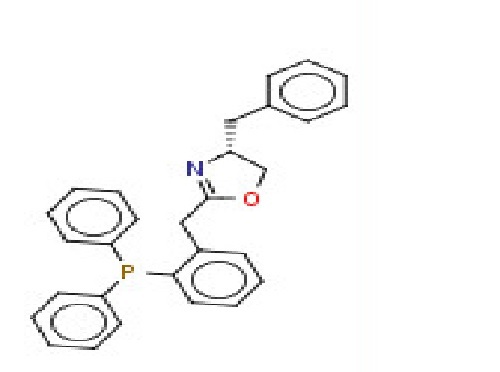
Chemical name: (3As,8ar)-2-(2-diphenylphosphinophenyl)-3a,8a-dihydroindane[1,2-d]oxazole
Synonyms: (3AS,8aR)-2-(2-diphenylphosphinophenyl)-3a,8a-dihydroindane[1,2-d]oxazole
(S,R)-In-Phox
Cas no: 201409-47-4
Purity: 95%
Molecular formula: C28H22NOP
MolecularWeight: 419.5Exceptional Stability and PurityWith a purity greater than 98%, this compound is supplied as a white to off-white crystalline powder and offers excellent stability when stored in cool, dry conditions under an inert atmosphere. Its air and moisture sensitivity is managed through secure packaging, maintaining integrity throughout its shelf life.
Advanced Applications in Asymmetric CatalysisThis chiral ligand is widely valued in organometallic research and transition metal catalysis, enabling the development of sophisticated asymmetric synthesis routes. Its strong optical activity and unique structure allow researchers to achieve high selectivity and efficiency in a range of catalytic processes.
Safe Handling and Convenient PackagingAlthough it is not classified as hazardous, this compound should be handled with care in laboratory settings. It is provided in sealed bottles under inert gas, preventing degradation. Custom packaging solutions are available for safe transport and storage, with no additional transport regulation requirements.
FAQ's of (3As,8ar)-2-(2-diphenylphosphinophenyl)-3a,8a-dihydroindane[1 ,2-d]oxazole:
Q: How should I store (3As,8ar)-2-(2-diphenylphosphinophenyl)-3a,8a-dihydroindane[1,2-d]oxazole to ensure maximum stability?
A: Store this material under an inert atmosphere-argon or nitrogen-in a cool, dry place away from air and moisture. Proper storage ensures stability and extends its shelf life to 2 years.
Q: What are the typical uses of this chiral ligand in research and synthesis?
A: It is primarily used as a ligand for asymmetric catalysis in transition metal complexes and in organometallic research to facilitate high selectivity in synthetic chemistry applications.
Q: When does this compound lose stability or degrade?
A: The compound is sensitive to air and moisture and loses stability if exposed. Decomposition occurs before boiling, so it should not be subjected to high temperatures or humid environments.
Q: Where can (3As,8ar)-2-(2-diphenylphosphinophenyl)-3a,8a-dihydroindane[1,2-d]oxazole be delivered, and is special transport required?
A: It is available from suppliers and traders across India and is transported as a non-regulated material. Sealed, inert-gas packaging ensures safe delivery and compliance with regulations.
Q: How is (3As,8ar)-2-(2-diphenylphosphinophenyl)-3a,8a-dihydroindane[1,2-d]oxazole typically handled in the lab?
A: While non-hazardous and non-poisonous, it should still be handled with gloves and appropriate lab safety measures, as recommended in the MSDS, due to its reactivity with air and moisture.
Q: What are the benefits of using this ligand in asymmetric catalysis?
A: As an optically active, chiral ligand, it enables precise control over stereochemistry, improving yields and selectivities in asymmetric reactions compared to non-chiral alternatives.


![(3As,8ar)-2-(2-diphenylphosphinophenyl)-3a,8a-dihydroindane[1 ,2-d]oxazole](https://cpimg.tistatic.com/13197889/b/4/-3As-8ar-2-2-diphenylphosphinophenyl-3a-8a-dihydroindane-1-2-d-oxazole.jpg)




 Send Inquiry
 Send Inquiry
 Send SMS
 Call Me Free


