Product Description
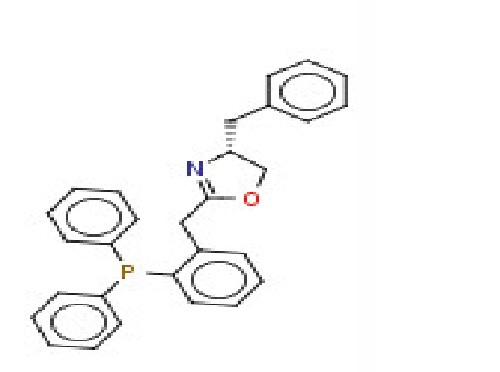
Chemical name: (R)-4-Benzyl-2-(2-(diphenylphosphino)benzyl)-4,5-dihydrooxazole
Cas no: 2901043-37-4
Purity: 95%
Molecular formula: C29H26NOP
Molecular Weight:435.5
High Enantioselectivity for Asymmetric CatalysisThe (R)-enantiomer of this phosphinooxazoline ligand is highly sought after for promoting exceptional enantioselectivity in various catalytic processes. Its unique structure offers significant advantages in reactions where precision and chiral purity are required, benefiting advanced research projects in pharmaceutical and fine chemical synthesis.
Safe Handling and PackagingTo preserve stability and efficacy, this ligand is typically supplied in amber glass bottles under an inert atmosphere. Researchers should handle it carefully, protecting it from air and moisture. Proper storage conditions ensure prolonged shelf life and safety in laboratory environments.
FAQ's of (R)-4-Benzyl-2-(2-(diphenylphosphino)benzyl)-4,5- dihydrooxazole:
Q: How should (R)-4-Benzyl-2-(2-(diphenylphosphino)benzyl)-4,5-dihydrooxazole be stored to maintain its stability?
A: This ligand must be stored at 2-8C in tightly sealed amber bottles under an inert gas to prevent degradation by air or moisture. Proper storage maintains its effectiveness for at least one year.
Q: What are the primary applications or benefits of using this compound in research?
A: It is primarily utilized as a chiral ligand in asymmetric catalysis, such as hydrogenation and allylic substitution, delivering high enantioselectivity important for the synthesis of pharmaceuticals and fine chemicals.
Q: When should researchers consider handling precautions for this ligand?
A: Use gloves, laboratory coats, and protective eyewear when handling the compound, as it may cause irritation to the eyes, skin, or respiratory tract, especially outside of an inert atmosphere.
Q: Where is this ligand typically used and what grade is supplied?
A: This product is intended for laboratory and research environments only, supplied at laboratory or research grade with typical purities above 98%.
Q: How is (R)-4-Benzyl-2-(2-(diphenylphosphino)benzyl)-4,5-dihydrooxazole transported and regulated?
A: It is not regulated as a dangerous good during transport and is packaged to maintain product integrity. However, it is restricted to laboratory use and unsuitable for drugs, household, or food applications.
Q: What solvents can be used to dissolve this ligand?
A: The ligand is soluble in organic solvents such as chloroform and dichloromethane, but only slightly soluble in water. These properties facilitate its use in organic synthesis.






![2-((2S,3S)-4-(Anthracen-9-yl)-3-(tert-butyl)-2,3-dihydrobenzo[d][1,3] oxaphosphol-2-yl)pyridine](https://cpimg.tistatic.com/13197771/b/4/2-2S-3S-4-Anthracen-9-yl-3-tert-butyl-2-3-dihydrobenzo-d-1-3-oxaphosphol-2-yl-pyridine.jpg?tr=w300)
![(3As,8ar)-2-(pyrimidin-2-yl)-8,8a-dihydro-3ah-indeno[1,2-d] oxazole](https://cpimg.tistatic.com/13197926/b/4/-3As-8ar-2-pyrimidin-2-yl-8-8a-dihydro-3ah-indeno-1-2-d-oxazole.jpg?tr=w300)
 Send Inquiry
 Send Inquiry
 Send SMS
 Call Me Free


