Product Description
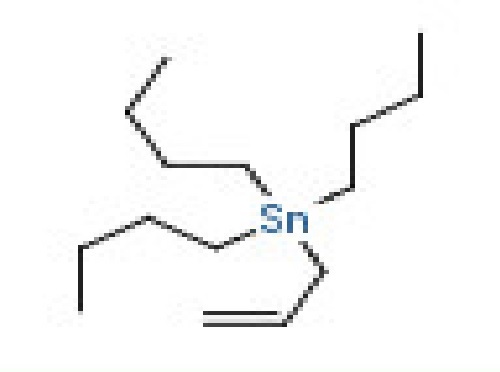
Chemical name: Allyltributyltin
Synonyms: Allyltributyltin
Allyltributylstannane
Cas no: 24850-33-7
Purity: 97%
Molecular formula: C15H32Sn
Molecular Weight:331.1
Appearance:LiquidSafety and Handling PrecautionsAllyltributyltin should always be handled in a well-ventilated area using appropriate protective equipment, including gloves and goggles. As the substance is highly toxic by ingestion, skin contact, or inhalation, avoid any exposure and keep the product tightly sealed when not in use. It decomposes on contact with air or moisture, so always handle under an inert atmosphere and away from acids or oxidizing agents.
Applications in Industry and ResearchThis compound is widely recognized as a valuable intermediate for organic synthesis and as a catalyst in specific polymerization processes. It is commonly utilized in pharmaceutical intermediate production, agrochemical research, and electronic materials development due to its unique reactivity and compatibility with organic solvents. The high purity of reagent and industrial grades ensures consistent results for specialized applications.
Storage and Stability GuidelinesTo maintain product integrity, store Allyltributyltin under an inert atmosphere, such as nitrogen or argon, in tightly closed containers. Keep it in a cool, dry, and well-ventilated place, away from sources of ignition and moisture. Storing the compound as recommended ensures its stability and maximizes shelf life, preventing hazardous decomposition or loss of efficacy.
FAQ's of Allyltributylti n:
Q: How should Allyltributyltin be safely stored and handled?
A: Allyltributyltin must be stored under an inert atmosphere (like nitrogen or argon) in tightly sealed containers, such as glass, steel, or polyethylene. Always keep it away from moisture, air, acids, and oxidizing agents. Personal protective equipment, including gloves and eye protection, is essential during handling due to its toxicity.
Q: What are the main industrial and research applications of Allyltributyltin?
A: This compound is mainly used as an intermediate in organic synthesis, a catalyst for polymerization reactions, and in the production of pharmaceuticals, agrochemicals, and specialty materials for electronics. Its high reactivity with organic solvents makes it valuable in research and high-purity industrial processes.
Q: When does Allyltributyltin start to decompose, and what precautions should be taken?
A: Allyltributyltin decomposes when exposed to air or moisture. To prevent decomposition, always manage the product in an inert atmosphere and keep containers tightly closed when not in use. Exposure to ignition sources or reactive chemicals should also be avoided.
Q: Where can Allyltributyltin be sourced, and what types of packaging are available?
A: Suppliers and traders in India provide Allyltributyltin in sealed glass bottles, steel drums, or polyethylene containers to ensure chemical stability and safety during transport and storage. It is available for both research and industrial-grade applications.
Q: What is the typical process for manufacturing Allyltributyltin?
A: Allyltributyltin is generally synthesized through the reaction of an allyl magnesium halide with tributyltin chloride. This method ensures a product with high purity, suitable for use in sensitive applications.
Q: What benefits does Allyltributyltin offer in chemical synthesis?
A: Allyltributyltin provides high reactivity and selectivity in organic reactions, making it an effective intermediate and reagent. Its solubility in organic solvents and compatibility with various synthesis routes enhance process efficiency in research and industrial settings.






 Send Inquiry
 Send Inquiry
 Send SMS


