Product Description
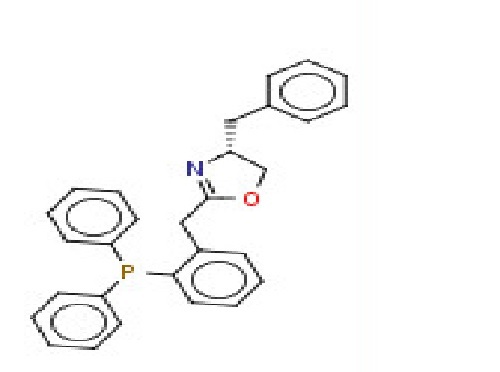
Chemical name: (3Ar,8as)-2[2-(diphenylphosphanyl)phenyl]-3a,8a-dihydroindane[1,2-d]oxazole
- Synonyms: (3AR,8aS)-2[2-(diphenylphosphanyl)phenyl]-3a,8a-dihydroindane[1,2-d]oxazole(R,S)-In-Phox
- (3aR,8aS)-2-[2-(diphenylphosphino)phenyl]-3a,8a-dihydro-8H-Indeno[1,2-d]oxazole
Cas no: 212312-33-9
Purity: 95%
Molecular formula: C28H22NOP
Molecular Weight:419.5
Appearance:SOLID Exceptional Performance in CatalysisAs a chiral phosphine ligand, this compound plays a crucial role in asymmetric synthesis, supporting high selectivity and yield in transition metal-catalyzed reactions. Its rigid bicyclic framework enhances stereoinduction, making it a preferred choice for complex syntheses in chemical research and development.
Reliable Handling and StorageDesigned for laboratory use, this ligand requires careful handling under inert conditions due to its air- and moisture-sensitivity. Proper storage in sealed amber vials at cool, dry locations helps maintain stability and extends shelf life, providing consistent performance for researchers.
Regulatory and Safety CommitmentProvided exclusively for research purposes, this compound complies with laboratory safety and regulatory requirements. Standard PPE is advised, and exposure should be minimized as comprehensive toxicity data may not be available.
FAQ's of (3Ar,8as)-2[2-(diphenylphosphanyl)phenyl]-3a,8a-dihydroindane [1,2-d]oxazole:
Q: How should (3Ar,8as)-2[2-(diphenylphosphanyl)phenyl]-3a,8a-dihydroindane[1,2-d]oxazole be handled and stored?
A: This compound should be handled in a laboratory setting using appropriate personal protective equipment. It must be stored in a sealed amber vial under inert atmosphere in a cool, dry place, away from moisture and light, to maintain stability and prevent decomposition.
Q: What is the primary benefit of using this ligand in research applications?
A: The main benefit is its effectiveness as a chiral ligand in asymmetric synthesis and homogeneous catalysis. Its rigid bicyclic structure and phosphine functionality promote excellent selectivity and efficiency in transition metal-based catalytic reactions.
Q: When is it advisable to use this compound in a chemical process?
A: It is recommended for use when performing asymmetric synthesis or transition metal-catalyzed processes that require precise stereochemical control or enhanced catalytic activity. Consult your process requirements to determine its suitability.
Q: Where can this ligand be applied most effectively?
A: This ligand is most effectively used in research laboratories focused on designing novel synthetic pathways, developing pharmaceuticals, and exploring homogeneous catalytic systems where chiral induction is critical.
Q: What is the process for obtaining spectral data such as NMR and MS for this compound?
A: Spectral data (NMR, MS) for this compound are available on request from your supplier or distributor to assist with compound verification and characterization.
Q: Is this compound suitable for household or therapeutic use?
A: No, it is strictly intended for research purposes only and is not permitted for drug formulation, household, or human use due to its safety profile and regulatory status.
Q: What precautions should be taken during usage for maximum safety?
A: Always use appropriate PPE including gloves, lab coat, and eye protection. Minimize inhalation and direct contact. Work inside a ventilated chemical fume hood, and immediately contain and neutralize any spills following laboratory safety protocols.


![(3Ar,8as)-2[2-(diphenylphosphanyl)phenyl]-3a,8a-dihydroindane [1,2-d]oxazole](https://cpimg.tistatic.com/13197817/b/4/-3Ar-8as-2-2-diphenylphosphanyl-phenyl-3a-8a-dihydroindane-1-2-d-oxazole.jpg)




 Send Inquiry
 Send Inquiry
 Send SMS
 Call Me Free


