Product Description
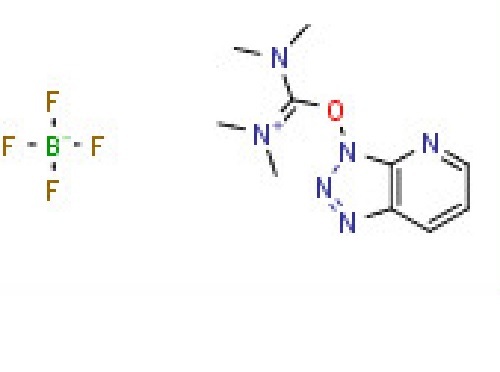
Chemical name: O-(7-Azabenzotriazole-1-yl)-N,N,N',N'-tetramethyluroniumtetrafluoroborate
Cas no: 873798-09-5
Purity: 98%
Molecular formula: C10H15N6O.BF4
Molecular Weight:322.1
Appearance:solidVersatile Reagent for Peptide SynthesisHATU is a trusted reagent in research settings, facilitating the efficient synthesis of peptides and proteins. With its high reactivity, this coupling agent is preferred for both routine and challenging bond-forming reactions. Its mild conditions help preserve delicate molecular structures, making it extremely valuable for sophisticated organic synthesis applications.
Optimal Storage for Maximum Shelf LifeTo ensure HATU remains effective for up to two years, it should be stored in a cool, dry environment, tightly sealed and protected from moisture and air. Typically supplied in amber glass bottles or sealed containers, maintaining an inert atmosphere is crucial to prevent degradation and preserve its high level of purity.
FAQ's of O-(7-Azabenzotriazole-1-yl)-N,N,N',N'-tetramethyluronium tetrafluoroborate:
Q: How should O-(7-Azabenzotriazole-1-yl)-N,N,N,N-tetramethyluronium tetrafluoroborate (HATU) be stored for best results?
A: Store HATU in a tightly sealed container, under an inert atmosphere, in a cool and dry place. Avoid exposure to moisture or air, as prolonged contact may cause degradation and reduce shelf life.
Q: What is the primary application of HATU in laboratory settings?
A: HATU is mainly used as a highly reactive coupling reagent in peptide synthesis. It facilitates peptide bond formation in the preparation of proteins and synthetic peptides in research and development laboratories.
Q: When does HATU decompose, and why is this important?
A: HATU decomposes above its melting point (180-183C). It's important to keep the reagent below this temperature during storage and use, ensuring it retains its reactivity and efficacy in chemical reactions.
Q: Where is HATU typically supplied from, and in what packaging?
A: HATU is commonly supplied in India by specialized chemical suppliers and traders. It is usually packaged in amber glass bottles or sealed containers to protect it from moisture and light.
Q: What precautions should be taken when handling HATU in the laboratory?
A: It is essential to avoid direct contact with skin, eyes, and clothing, as HATU can cause irritation and is harmful if swallowed. Work in a well-ventilated area and use appropriate protective equipment, including gloves, goggles, and lab coats.
Q: How is HATU beneficial compared to other coupling reagents?
A: HATU offers high reactivity under mild conditions, minimizing side reactions and preserving sensitive functional groups during peptide bond formation. Its efficiency makes it a popular choice for complex organic syntheses.






![(3As,8ar)-2-(pyrimidin-2-yl)-8,8a-dihydro-3ah-indeno[1,2-d] oxazole](https://cpimg.tistatic.com/13197926/b/4/-3As-8ar-2-pyrimidin-2-yl-8-8a-dihydro-3ah-indeno-1-2-d-oxazole.jpg?tr=w300)
 Send Inquiry
 Send Inquiry
 Send SMS
 Call Me Free


