Product Description
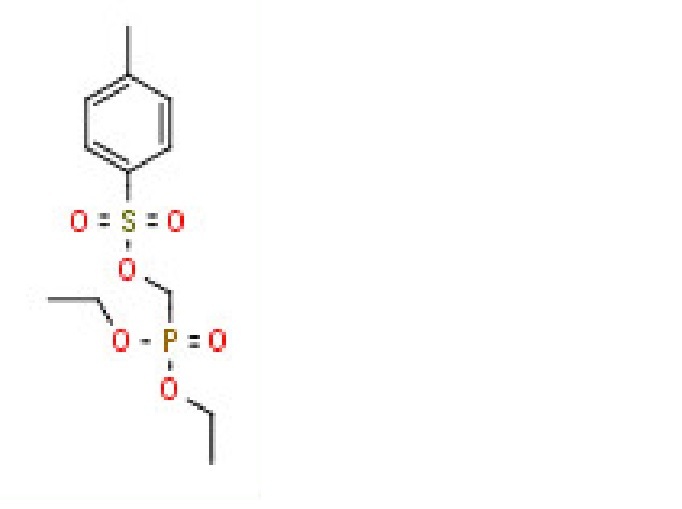
Chemical Name: Diethyl (tosyloxy)methylphosphonate
Synonyms :DiethylP-((((4-methylphenyl)sulfonyl)oxy)methyl)phosphonate
CAS No : 31618-90-3
Purity : 98%
Molecular Formula : C12H19O6PS
Molecular Weight :322.3
Appearance : LiquidAdvanced Intermediate for SynthesisDiethyl (tosyloxy)methylphosphonate serves as a key intermediate in the preparation of substituted phosphonates, making it highly valuable in pharmaceutical and organic synthesis workflows. Its use accelerates and simplifies complex phosphorylation processes, supporting efficient route selection for chemists in research and industrial projects.
Safety and Handling RecommendationsThis powder is classified as non-poisonous and stable under proper storage. However, it can cause irritation to eyes, skin, and the respiratory tract. Always wear protective gloves, clothing, and safety glasses, and avoid inhaling dust. Store in a cool, dry place and keep the container tightly closed to ensure safety and product integrity.
Packaging Options and Shelf LifeTo fit varying scales of operation, Diethyl (tosyloxy)methylphosphonate is available in 25g, 100g, and 500g HDPE bottles, or custom packaging on request. When stored correctly, this product retains optimal quality for up to 2 years, offering convenience and extended usability for laboratory and industrial applications.
FAQ's of Diethyl (tosyloxy)methylphosphonate:
Q: How should Diethyl (tosyloxy)methylphosphonate be stored to maintain stability?
A: Keep the powder in a tightly sealed container, stored in a cool, dry location. This ensures its stability and preserves its quality for up to two years.
Q: What protective measures are recommended when handling Diethyl (tosyloxy)methylphosphonate?
A: Wear protective gloves, clothing, and safety glasses, and minimize dust formation to prevent irritation to the eyes, skin, and respiratory system during handling.
Q: Where can Diethyl (tosyloxy)methylphosphonate be applied in chemical synthesis?
A: It is used chiefly as an intermediate for pharmaceuticals and in the synthesis of substituted phosphonates, demonstrating versatility in both research and industrial chemistry settings.
Q: When does Diethyl (tosyloxy)methylphosphonate decompose, and what is its melting point?
A: The compound decomposes before reaching its boiling point and melts at temperatures between 77C and 81C.
Q: What are the solubility properties of Diethyl (tosyloxy)methylphosphonate?
A: It is slightly soluble in water but dissolves readily in organic solvents such as dichloromethane and methanol, facilitating its integration into various synthesis processes.
Q: Is Diethyl (tosyloxy)methylphosphonate considered hazardous for shipping or handling?
A: It is not classified as a hazardous material for transport. Nevertheless, standard laboratory safety precautions should be observed while handling the substance.
Q: What are the benefits of using Diethyl (tosyloxy)methylphosphonate as a reagent?
A: The compound provides efficient phosphorylating capability, reliability, and high purity, strengthening the outcomes of organic and pharmaceutical synthesis routes.








 Send Inquiry
 Send Inquiry
 Send SMS


