Product Description
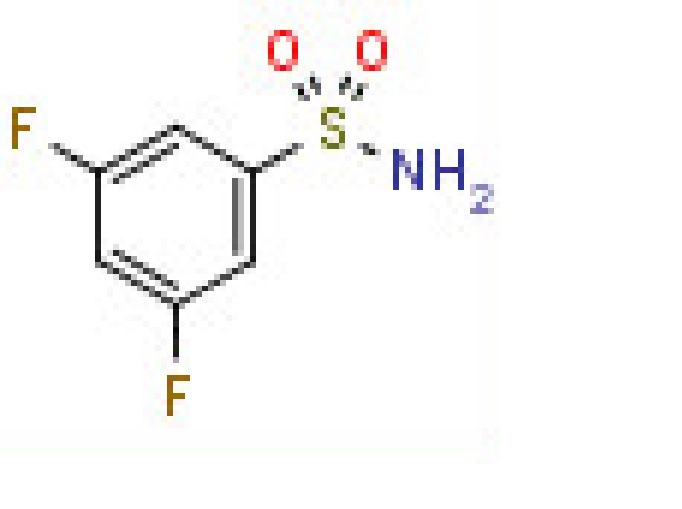
Chemical Name: 3,5-Difluorobenzenesulfonamide
Synonyms :3,5-difluorobenzene-1-sulfonamide
CAS No : 140480-89-3
Purity : 97%
Molecular Formula:C6H5F2NO2S
Molecular Weight:193.2
Appearance : SolidReliable Performance for Research and Development3,5-Difluorobenzenesulfonamide is highly valued as an intermediate in pharmaceutical and agrochemical research. Its analytical grade and high purity make it ideal for precise laboratory work and organic synthesis, ensuring reliable results every time. Stable under recommended storage conditions, it facilitates consistent performance in experimental processes.
Safe Handling and Convenient StorageThis solid compound is stable at ambient temperatures and pressures, though it is sensitive to moisture. Non-hazardous under GHS criteria and not regulated by UN conventions, it simplifies lab management. Users should still wear personal protective equipment and store the product in tightly closed HDPE bottles in a cool, dry place to maintain its quality.
FAQ's of 3,5- Difluorobenzenesulfonamide:
Q: How should 3,5-Difluorobenzenesulfonamide be safely handled and stored?
A: Always use personal protective equipment and avoid inhalation or direct skin contact. Store the substance in a tightly closed container, preferably an HDPE bottle, and keep it in a cool, dry location to prevent moisture exposure.
Q: What are the primary applications of 3,5-Difluorobenzenesulfonamide?
A: It serves as a pharmaceutical intermediate, is used in agrochemical synthesis, and supports research and development in organic synthesis laboratories.
Q: When is it beneficial to use this compound over other sulfonamides?
A: It is particularly beneficial when high purity and analytical grade material is required for reliable and reproducible laboratory or synthetic processes.
Q: Where can this product be sourced from?
A: 3,5-Difluorobenzenesulfonamide can be supplied and traded in India, with customizable packaging as per client requirements.
Q: What is the recommended process for disposal of unused or waste material?
A: Follow local environmental and chemical disposal regulations. Collect any waste or residue and dispose of it through approved chemical waste facilities.
Q: How does the compound benefit laboratory workflows?
A: Its stability, high purity, and solubility in organic solvents make it highly adaptable for efficient and reproducible results in various chemical syntheses and analytical applications.






![1-[(Ethanesulfonyl)methyl] -4-nitrobenzene](https://cpimg.tistatic.com/11856772/b/4/1-Ethanesulfonyl-methyl-4-nitrobenzene.jpg?tr=w300)
 Send Inquiry
 Send Inquiry
 Send SMS


