Product Description
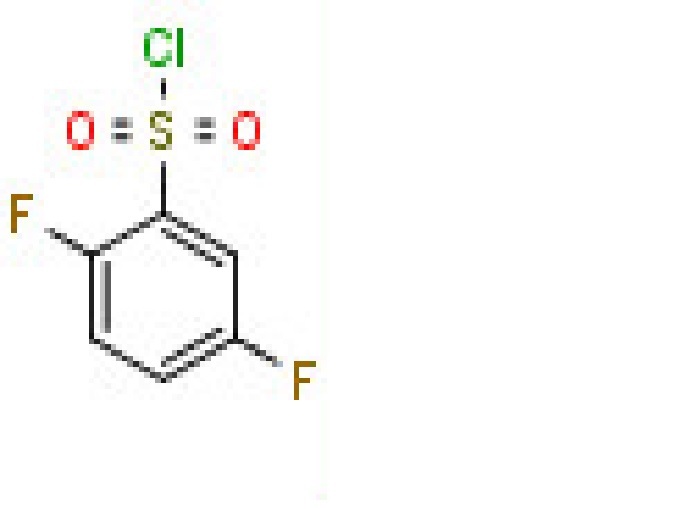
Chemical Name:2,5-Difluorobenzenesulfonyl chloride
Synonyms :2,5-Difluorobenzene-1-Sulfonyl Chloride
CAS No : 26120-86-5
Purity : 97%
Molecular Formula: C6H3ClF2O2S
Molecular Weight:212.6
Appearance : LiquidApplications in Synthesis and Industry2,5-Difluorobenzenesulfonyl chloride is a crucial intermediate in the synthesis of sulfonamides, pharmaceuticals, and agrochemicals. Its reactive sulfonyl chloride group makes it ideal for introducing sulfonyl moieties to organic molecules, enhancing their biological or material properties. This versatility ensures it is valued in research, development, and industrial manufacturing settings.
Safe Handling and Storage PracticesDue to its corrosive and toxic properties, it is essential to handle this chemical with appropriate personal protective equipment, including gloves, goggles, and chemical-resistant clothing. Always operate in a well-ventilated fume hood and avoid water contact, as it releases hazardous fumes. Store the reagent in sealed containers, away from moisture and direct sunlight, to maximize its 24-month shelf life.
Packaging and Transport ConsiderationsThe product is securely packaged in sealed glass bottles or HDPE containers to prevent leaks and moisture exposure. It is transported as a hazardous material under UN 3261, classified as a Class 8 corrosive substance, ensuring safety from production to delivery. These measures help maintain product integrity and comply with international regulations.
FAQ's of 2,5-Difluorobenzenesulfonyl chloride:
Q: How should 2,5-Difluorobenzenesulfonyl chloride be safely handled in the laboratory?
A: This compound should only be handled within a well-functioning fume hood using gloves, goggles, and chemical-resistant clothing due to its corrosive and toxic nature. Direct skin contact or inhalation should be strictly avoided.
Q: What are the main uses of 2,5-Difluorobenzenesulfonyl chloride?
A: It is primarily used as a sulfonylating agent in the synthesis of pharmaceuticals, sulfonamides, and agrochemicals, facilitating the introduction of sulfonyl groups to organic molecules for research and manufacturing applications.
Q: When is it necessary to dispose of 2,5-Difluorobenzenesulfonyl chloride?
A: Disposal is needed if the chemical exceeds its 24-month shelf life under proper storage, if contamination is suspected, or if the packaging is compromised. Always follow hazardous waste regulations for corrosive and toxic substances.
Q: Where should 2,5-Difluorobenzenesulfonyl chloride be stored?
A: Store it in a cool, dry area, protected from moisture and direct sunlight, within tightly sealed glass or HDPE containers to maintain stability and safety.
Q: What benefits does the reactive sulfonyl chloride group provide in synthesis?
A: The sulfonyl chloride group allows efficient introduction of sulfonyl functionalities into target molecules, broadening chemical diversity, and enabling the development of pharmacologically or agriculturally active compounds.
Q: How is 2,5-Difluorobenzenesulfonyl chloride transported?
A: It is shipped in compliance with UN 3261 regulations for Class 8 (Corrosive) substances, using robust glass or HDPE containers to ensure safe handling and minimize exposure during transit.






![2,2-Dichloro-N-[(1R,2S)-3-fluoro-1-hydroxy-1-(4-methanesulfonylphenyl)propan-2-yl] acetamide](https://cpimg.tistatic.com/10912818/b/4/2-2-Dichloro-N-1R-2S-3-fluoro-1-hydroxy-1-4-methanesulfonylphenyl-propan-2-yl-acetamide.jpg?tr=w300)
 Send Inquiry
 Send Inquiry
 Send SMS
 Call Me Free


