Product Description
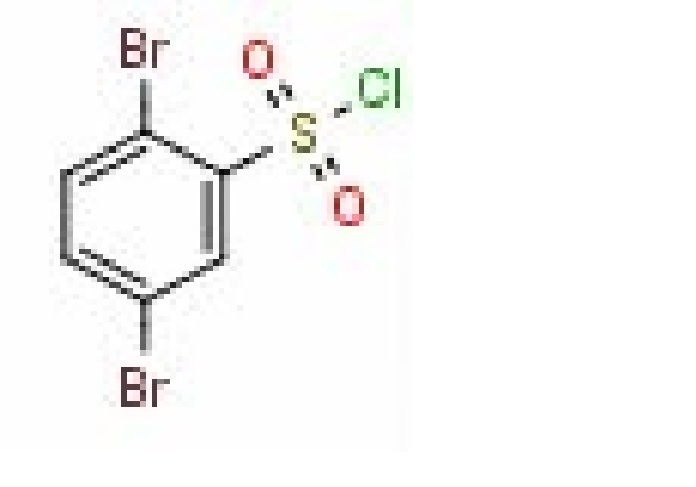
Chemical Name:2,5-Dibromobenzenesulfonyl chloride
Synonyms : 2,5-Dibromobenzene-1-sulfonylchloride
CAS No : 23886-64-8
Purity : 97%
MolecularFormula : C6H3Br2ClO2S
Molecular Weight: 334.4
Appearance: SolidKey Properties and Physical Characteristics2,5-Dibromobenzenesulfonyl chloride is a solid compound with a melting point of 91-95C and a density of 2.11 g/cm3. Its appearance varies from off-white to pale yellow, typically forming a crystalline powder. While soluble in dichloromethane and benzene, it decomposes rapidly in water. The chemical is light sensitive and emits a pungent odor, emphasizing the necessity for proper storage and handling.
Safe Handling and Storage AdviceDue to its corrosive nature and tendency to decompose in the presence of moisture, this compound must be handled with protective gloves, clothing, and in well-ventilated areas. Store it tightly sealed in a cool, dry place, away from direct light and moisture to maintain its stability and 24-month shelf life. Always avoid inhalation and direct skin or eye contact.
Applications in Organic SynthesisPrimarily utilized in research and laboratory settings, 2,5-Dibromobenzenesulfonyl chloride serves as a reagent for introducing sulfonyl chloride groups into organic molecules. Its applications extend to the preparation of sulfonamides and as a pharmaceutical intermediate. The compound's high purity and reliability make it valuable for both academic and industrial organic synthesis processes.
FAQ's of 2,5-Dibromobenzenesulfonyl chloride:
Q: How should 2,5-Dibromobenzenesulfonyl chloride be safely handled during laboratory work?
A: The compound must be handled using adequate ventilation while wearing appropriate protective gloves, safety goggles, and lab clothing to prevent skin and eye contact. Always avoid inhalation and strictly prevent exposure to moisture or water while working with the substance.
Q: What is the recommended process for storing 2,5-Dibromobenzenesulfonyl chloride?
A: Store the compound in a tightly sealed container in a cool, dry location, away from moisture, heat, and direct sunlight. These conditions help preserve its stability and maintain its efficacy for up to 24 months.
Q: When does 2,5-Dibromobenzenesulfonyl chloride decompose, and what precautions should be taken?
A: It decomposes before boiling and readily reacts and decomposes upon contact with water, alcohols, or moisture. During use and storage, always keep the substance dry and minimize exposure to air and light to avoid unwanted decomposition.
Q: Where is 2,5-Dibromobenzenesulfonyl chloride commonly applied?
A: This compound is primarily used in scientific research and development, particularly for organic synthesis, sulfonamide preparation, and as a pharmaceutical intermediate in laboratories and chemical industries.
Q: What are the main uses and benefits of 2,5-Dibromobenzenesulfonyl chloride in organic chemistry?
A: It acts as a reagent for introducing sulfonyl chloride groups into organic molecules. Its benefits include high purity, reliability, and effectiveness in synthesizing sulfonamides and other specialty chemical compounds needed for pharmaceutical applications.
Q: How does the compound's corrosive and toxic properties affect its usage?
A: Because it is classified as hazardous (corrosive and harmful if inhaled or swallowed), only trained personnel should use it, with strict adherence to safety protocols. This minimizes health risks and ensures safe, effective laboratory practice.
Q: What should be done if accidental exposure to 2,5-Dibromobenzenesulfonyl chloride occurs?
A: In case of skin or eye contact, immediately flush the affected area with ample water and seek medical attention. If inhaled or ingested, move to fresh air and obtain prompt medical assistance. Always consult your laboratory's safety data guidelines for specific emergency measures.






![1,4-Dioxaspiro[4.5]decan-8-yl 4-methylbenzenesulfonate](https://cpimg.tistatic.com/11559535/b/4/1-4-Dioxaspiro-4-5-decan-8-yl-4-methylbenzenesulfonate.jpg?tr=w300)
 Send Inquiry
 Send Inquiry
 Send SMS


