Product Description
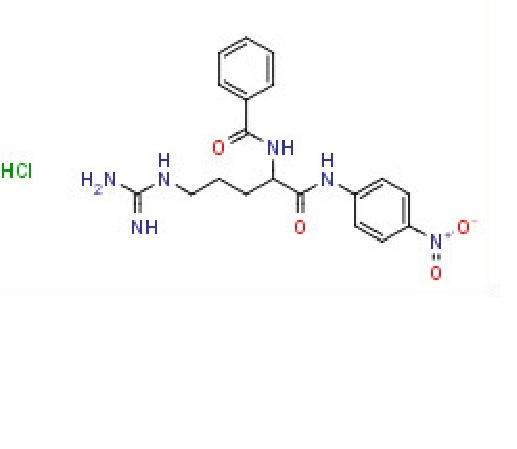
Product name : N-Benzoyl-DL-arginine-4-nitroanilidehydrochloride
Synoyms: Benzamide, N-[4(aminoiminomethyl)amino]-1-(4-nitrophenyl)amino]carbonyl]butyl]-,hydrochloride (1:1) Benzamide
CAS No: 911-77-3
Purity: 98%
Molecular Formula: C19H22N6O4.ClH
Molecular Weight: 434.9
Appearance : solidAdvanced Peptide Substrate for Biochemical ResearchBAPNA serves as a reliable analytical-grade substrate, routinely employed in protease assays to measure enzyme activity. Its high solubility in water and DMSO, coupled with exceptional purity and chemical stability, ensures accurate and reproducible results. The compound's characteristic color enables easy detection of enzymatic reactions, making it an essential tool in laboratories focused on protein and enzyme studies.
Safe Handling and Storage GuidelinesTo sustain product integrity, BAPNA should be stored at -20C in tightly sealed containers, away from light and moisture. Handling precautions include avoiding contact with skin and eyes, as it may cause irritation. Adhering to recommended storage and safety practices ensures the product's full shelf life and consistent analytical performance during repeated use.
FAQ's of N-Benzoyl-DL-arginine-4-nitroanilide hydrochloride:
Q: How should N-Benzoyl-DL-arginine-4-nitroanilide hydrochloride (BAPNA) be stored to maintain stability?
A: BAPNA should be stored at -20C in a sealed bottle or vial, protected from light and moisture, to maintain its stability and extend its shelf life up to two years.
Q: What are the primary uses of BAPNA in laboratory research?
A: This peptide substrate is primarily used in biochemical research for protease assays, especially as a substrate for trypsin and other proteolytic enzymes, enabling precise measurement of enzyme activity.
Q: When should BAPNA be utilized in an enzyme assay process?
A: BAPNA is ideal for use during protease activity assays when a specific, chromogenic substrate is required to facilitate spectrophotometric measurement at 405 nm, indicating enzyme action.
Q: Where is BAPNA most effectively applied in scientific workflows?
A: It is most effectively used in biochemical and analytical laboratories conducting protein characterization, enzymatic studies, or developing diagnostics involving protease activity detection.
Q: What is the benefit of using BAPNA compared to other peptide substrates?
A: BAPNA offers high purity (98%), excellent solubility, and a clear colorimetric response, ensuring accurate, sensitive, and reproducible results in enzyme assays.
Q: How should BAPNA be handled to minimize risk during use?
A: Care should be taken to avoid inhalation or contact with eyes and skin, as BAPNA can cause irritation; appropriate personal protective equipment and good laboratory practices are recommended.






 Send Inquiry
 Send Inquiry
 Send SMS
 Call Me Free


