Product Description
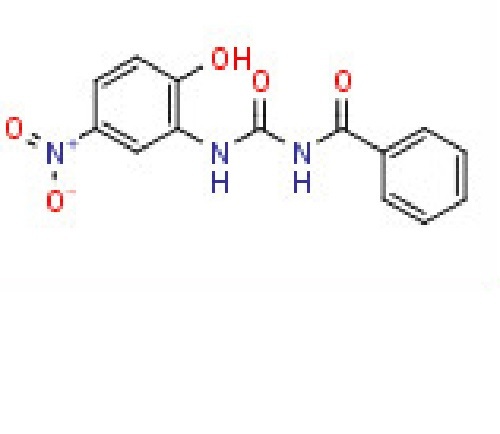
Product name : 1-Benzoyl-3-(2-hydroxy-5-nitrophenyl)urea
Synoyms: N-((2-Hydroxy-5-nitrophenyl)carbamoyl)benzamide
N-[(2-Hydroxy-5-nitrophenyl)carbamoyl]benzamide
CAS No: 1820639-05-1
Purity: 98%
Molecular Formula: C14H11N3O5
Molecular Weight: 301.3
Appearance : solidHigh Purity and Reliable PerformanceWith an assay of greater than 98% (HPLC), 1-Benzoyl-3-(2-hydroxy-5-nitrophenyl)urea ensures consistent and reliable outcomes in research and synthesis. Its analytical grade classification supports high-standard experimental requirements, and solid stability at room temperature simplifies storage and handling logistics.
Versatility in Laboratory ApplicationsThis compound serves as a valuable intermediate in pharmaceutical and chemical research. Its solubility in common organic solvents such as DMSO and DMF makes it highly adaptable for various synthetic protocols. The solid, odorless powder form allows precision in measurement and adds convenience to research procedures.
FAQ's of 1-Benzoyl-3- (2-hydroxy-5-nitrophenyl) urea:
Q: How should I store 1-Benzoyl-3-(2-hydroxy-5-nitrophenyl)urea for maximum stability?
A: 1-Benzoyl-3-(2-hydroxy-5-nitrophenyl)urea should be stored in a cool, dry, and well-ventilated area. Make sure the container is tightly sealed to prevent moisture ingress. Under these conditions, the compound remains stable and retains its properties for up to two years.
Q: What is the recommended process for dissolving this compound?
A: The compound is slightly soluble in water but dissolves readily in organic solvents like DMSO or DMF. For most laboratory protocols, add the required amount to your chosen solvent and gently agitate or stir until fully dissolved.
Q: When is this compound typically used in research or industry?
A: 1-Benzoyl-3-(2-hydroxy-5-nitrophenyl)urea is primarily used as an intermediate in organic synthesis, especially within pharmaceutical research or chemical development projects. It enables the creation of more complex molecules in advanced chemical research.
Q: Where can I obtain regulatory and safety information for this material?
A: Product safety and regulatory details are available on the supplied material safety data sheet (MSDS). Importantly, this compound is designated strictly for research use-not for human or veterinary purposes. Always follow standard laboratory safety procedures, utilizing gloves and eye protection.
Q: What are the main benefits of using this compound in organic synthesis?
A: The high purity and reliable solubility characteristics of this compound enhance reaction consistency and product quality. Its stability and ease of handling contribute to streamlined workflows, supporting laboratorians seeking efficient synthesis routes.
Q: Is there any special requirement for transporting this product?
A: No special transport arrangements are necessary. The compound may be shipped and stored at ambient temperatures, and both glass bottles and HDPE containers are standard packaging options to maintain product integrity during transit.






 Send Inquiry
 Send Inquiry
 Send SMS
 Call Me Free


