Product Description
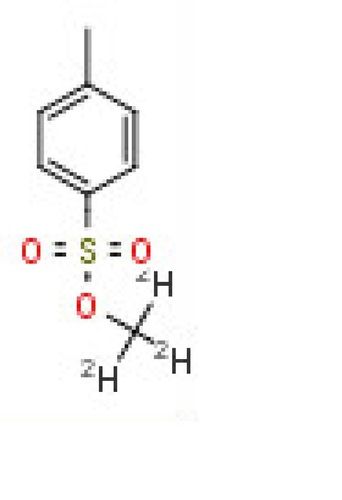
Chemical Name: Methyl-d3p-toluenesulfonate
Synonyms : METHYL-D3P-TOLUENESULFONATE
Trideuteriomethyl4-methylbenzenesulfonate
Methy-d3(toluenesulfonate)
Cas No : 7575-93-1
Purity : 98%
MolecularFormula : C8H10O3S
Molecular Weight: 189.2
Appearance: Solid
Analytical Precision with High Isotopic PurityMethyl-d3 p-toluenesulfonate delivers over 98 atom % deuterium enrichment, making it ideal for applications where isotopic labeling and trace analysis are required. Its purity and stability support reliable and reproducible results in both research and development environments.
Safe and Convenient PackagingThe product is supplied in a sealed amber glass bottle, ensuring protection from light and minimizing moisture exposure. This packaging maintains the chemical's stability and integrity, supporting a shelf life of up to 24 months when stored under recommended conditions.
FAQ's of Methyl-d3 p-toluenesulfonate:
Q: How should Methyl-d3 p-toluenesulfonate be stored for maximum stability?
A: Store the compound at 2-8C in a dry place, protected from light, to maintain its 24-month shelf life and prevent hydrolysis due to moisture.
Q: What are the primary uses or applications of Methyl-d3 p-toluenesulfonate?
A: It serves as a deuterium source for NMR studies, organic synthesis, and in the preparation of pharmaceutical intermediates, where high isotopic enrichment and purity are required.
Q: When is this product considered hazardous during handling or transport?
A: Methyl-d3 p-toluenesulfonate is not classified as hazardous for shipping; however, laboratory safety precautions must be followed to avoid inhalation or skin and eye contact, as it is poisonous and intended for laboratory use only.
Q: Where can Methyl-d3 p-toluenesulfonate be sourced?
A: It is available through suppliers and traders in India, generally provided in sealed amber glass bottles suitable for analytical and research purposes.
Q: What benefits does its analytical reagent grade and isotopic purity offer?
A: The high purity and isotopic enrichment ensure accurate integration of deuterium into target molecules, enhancing the reliability and sensitivity of analytical or synthetic applications.
Q: What is the recommended process for handling this compound in the laboratory?
A: Use standard laboratory safety procedures: work in a well-ventilated area, wear appropriate personal protective equipment, and avoid all forms of direct contact or inhalation.
Q: How is Methyl-d3 p-toluenesulfonate physically described and what is its solubility?
A: The compound is a colorless to pale yellow liquid with a faint characteristic smell, neutral pH in solution, and is soluble in organic solvents like dichloromethane or chloroform, but insoluble in water.








 Send Inquiry
 Send Inquiry
 Send SMS


