Product Description
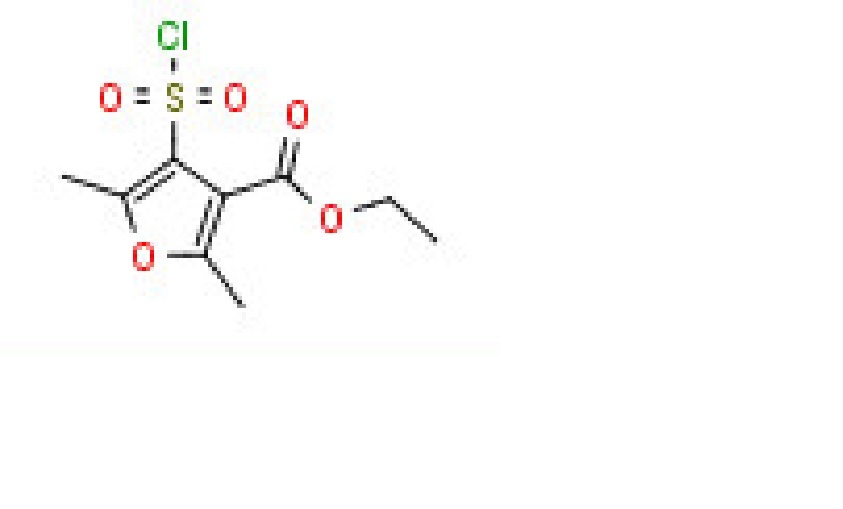
Chemical Name: Ethyl4-(chlorosulphonyl)-2,5-dimethyl-3-furoate
CAS No : 306936-32-3
Purity : 95%
MolecularFormula : C9H11ClO5S
Molecular Weight:266.7
Appearance : LiquidApplications and UsageThis compound is widely used as an intermediate in the synthesis of pharmaceutical drugs and agrochemicals, thanks to its high reactivity and functional chemical groups. Its unique structure facilitates complex organic reactions, making it a valuable asset in research and industrial environments where the generation of specific functionalized molecules is required.
Safe Handling and StorageEthyl 4-(chlorosulphonyl)-2,5-dimethyl-3-furoate must be handled using appropriate personal protective equipment under a dry or inert atmosphere, as it is both moisture-sensitive and corrosive. The substance should be stored in a tightly closed container, placed in a cool and dry area, well away from any moisture or water sources to preserve stability and extend shelf life.
FAQ's of Ethyl 4-(chlorosulphonyl)-2,5-dimethyl-3-furoate:
Q: How should Ethyl 4-(chlorosulphonyl)-2,5-dimethyl-3-furoate be stored to ensure maximum stability?
A: This compound should be stored in a tightly closed container within a cool, dry location, away from moisture and direct sunlight. Exposure to water or humid air may cause decomposition, so desiccants or an inert atmosphere are recommended for optimal preservation.
Q: What are the safety precautions when handling this substance?
A: Strict personal protective equipment (PPE) is required, including gloves, goggles, and protective clothing. Handle only under a dry or inert atmosphere, and avoid all contact with skin, eyes, and respiratory pathways. Immediate emergency measures should be available in case of exposure.
Q: When is it appropriate to use Ethyl 4-(chlorosulphonyl)-2,5-dimethyl-3-furoate in synthesis processes?
A: This intermediate is suitable for use when manufacturing pharmaceutical compounds or agrochemicals that require functionalized furan derivatives. It is selected for processes where high reactivity and specific sulfonylation or esterification steps are necessary.
Q: Where should this chemical be used to minimize hazards?
A: Operations involving this chemical should be conducted in a well-ventilated fume hood, using designated, corrosion-resistant equipment. Only trained personnel in facilities equipped for hazardous materials should handle or process this substance.
Q: What is the primary benefit of using this compound in organic synthesis?
A: Its high reactivity and specific structural features make it valuable for generating complex molecules in pharmaceutical and agrochemical synthesis, thus enabling efficient creation of chemically advanced intermediates and final products.
Q: How is Ethyl 4-(chlorosulphonyl)-2,5-dimethyl-3-furoate transported safely?
A: It is classified as Dangerous Goods under UN 3261. Transport must be carried out in secure fibre drums or HDPE containers, avoiding extreme temperatures or contact with water throughout transit to prevent accidental decomposition or release.






 Send Inquiry
 Send Inquiry
 Send SMS
 Call Me Free


