Product Description
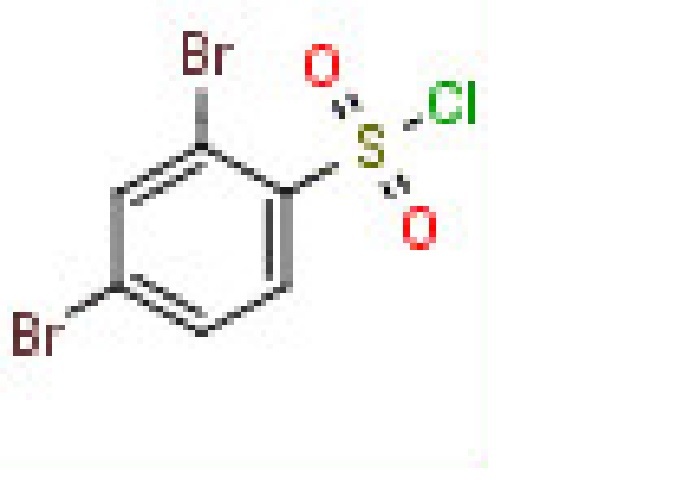
Chemical Name:2,4-Dibromobenzenesulfonyl chloride
Synonyms : 2,4-dibromobenzene-1-sulfonylchloride
CAS No : 72256-95-2
Purity : 95%
MolecularFormula : C6H3Br2ClO2S
Molecular Weight: 334.4
Appearance: SolidVersatile Intermediate for Synthetic Chemistry2,4-Dibromobenzenesulfonyl chloride is prized for its reactivity, making it an essential intermediate in the synthesis of fine chemicals, pharmaceuticals, and dyestuffs. Its sulfonyl chloride group allows for efficient sulfonation processes and the introduction of sulfonate functionalities into target molecules.
Safety and Handling ConsiderationsDue to its corrosive nature and potential health hazards, handling this compound requires strict adherence to safety protocols. Protective clothing, gloves, and proper eye protection are mandatory. Ensure storage is in a tightly closed container, away from moisture and incompatible substances, to preserve its stability and efficacy.
FAQ's of 2,4-Dibromobenzenesulfonyl chloride:
Q: How should 2,4-Dibromobenzenesulfonyl chloride be stored to maintain its stability?
A: Store the compound in a tightly sealed container within a cool, dry, and well-ventilated environment. Protect it from moisture and keep it under a dry, inert atmosphere to prevent decomposition and maintain its shelf life.
Q: What is the main industrial or laboratory usage of 2,4-Dibromobenzenesulfonyl chloride?
A: This chemical serves as an intermediate in the synthesis of pharmaceuticals, agrochemicals, and dyes, and acts as a sulfonation agent in organic synthesis, enabling the incorporation of sulfonyl groups into various compounds.
Q: When does 2,4-Dibromobenzenesulfonyl chloride decompose instead of boiling?
A: The compound decomposes at elevated temperatures before reaching its boiling point, so it should not be subjected to excessive heating during processing or storage.
Q: Where should 2,4-Dibromobenzenesulfonyl chloride be handled to ensure user safety?
A: Always handle the compound within a laboratory fume hood or well-ventilated area equipped for managing hazardous or corrosive substances. Follow institutional safety guidelines for handling chemicals in Class 8 (corrosive) transport category.
Q: What protective measures are recommended when working with this compound?
A: It is essential to wear protective gloves, lab coats, and eye protection when handling 2,4-Dibromobenzenesulfonyl chloride, as it causes severe skin burns and eye damage. In case of any exposure, seek medical attention immediately.
Q: How is 2,4-Dibromobenzenesulfonyl chloride supplied and packaged for laboratory use?
A: The compound is usually available in 25 g, 100 g, or 500 g glass bottles, although custom packaging can be arranged as needed for specific research or manufacturing requirements.
Q: What are the key benefits of using 2,4-Dibromobenzenesulfonyl chloride in synthesis?
A: Its high reactivity and selectivity enable efficient sulfonation and incorporation of functional groups, making it valuable for developing new chemical entities for pharmaceuticals and specialty chemicals.








 Send Inquiry
 Send Inquiry
 Send SMS


