Product Description
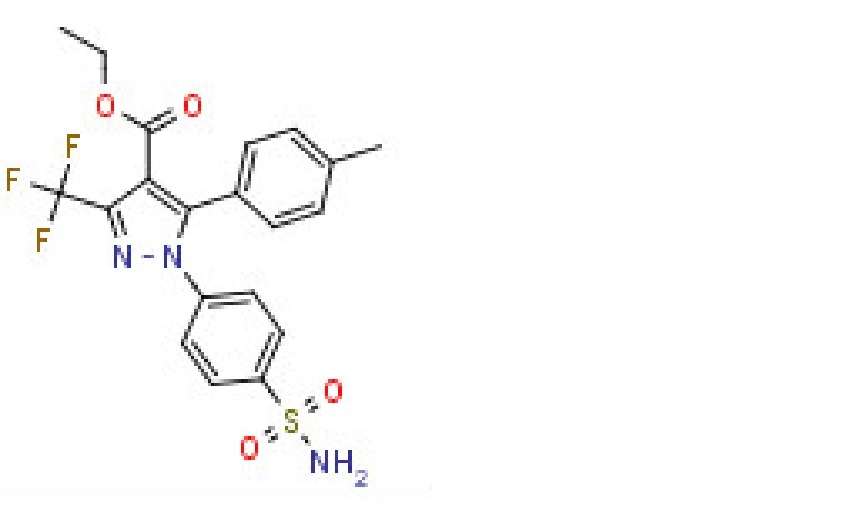
Chemical Name: Ethyl1-(4-(aminosulfonyl)phenyl)-3-(trifluoromethyl)-5-p-tolyl-1h-pyrazole-4-carboxylate
CAS No : 1206970-24-2
Purity : 95%
MolecularFormula : C20H18F3N3O4S
Molecular Weight:453.4
Appearance : SolidKey Features and CompositionThis compound boasts a molecular formula of C20H18F3N3O4S and a molecular weight of 437.44 g/mol. Provided in off-white to pale yellow crystalline form, it contains a purity of 98%. The ingredient is specifically designed for research and intermediate use in pharmaceutical applications, aligning with stringent industry standards. Each batch is carefully tested to confirm quality and compliance.
Safe Handling and Storage GuidelinesAlways handle Ethyl 1-(4-(aminosulfonyl)phenyl)-3-(trifluoromethyl)-5-p-tolyl-1H-pyrazole-4-carboxylate with care, as it may cause irritation to the eyes and skin. Store the product tightly sealed at 2-8C, protected from light and moisture, to preserve its integrity. While it is stable under normal conditions and poses no hazardous risks in transport, use personal protective equipment during handling.
Application and Research BenefitsThis compound serves primarily as a pharmaceutical intermediate, used in the synthesis of drug candidates, particularly for anti-inflammatory and antidiabetic research. Its high purity ensures dependable results during experimental applications. Its unique structure enables researchers and pharmaceutical companies to explore new therapeutic avenues.
FAQ's of Ethyl 1-(4-(aminosulfonyl)phenyl)-3-(trifluoromethyl)-5-p-tolyl-1h-pyrazole-4-carboxylate:
Q: How should Ethyl 1-(4-(aminosulfonyl)phenyl)-3-(trifluoromethyl)-5-p-tolyl-1H-pyrazole-4-carboxylate be handled to ensure safety?
A: Handle the compound with appropriate personal protective equipment, as it may cause skin or eye irritation. Avoid direct contact, and work in a well-ventilated area. Always follow proper laboratory safety protocols when using this substance.
Q: What is the main usage of this compound in research or industry?
A: This product is mainly used as an intermediate in the synthesis of pharmaceutical compounds, particularly in drug development related to anti-inflammatory or antidiabetic agents. It is intended for laboratory and research applications only.
Q: Where should the product be stored to maintain its quality?
A: Store the compound tightly sealed at temperatures between 2-8C, protected from light and moisture. Adhering to these storage conditions helps preserve its stability and purity for up to two years.
Q: What are the benefits of using this compound as a pharmaceutical intermediate?
A: Its high purity (98%) and stable crystalline form offer reliable reproducibility during research. The unique molecular structure supports the synthesis of novel therapeutics, providing value to pharmaceutical R&D processes.
Q: Can this compound be transported safely, and under what classification?
A: Yes, this material is classified as a non-hazardous chemical for transport, allowing for safe shipment under standard conditions using sealed packaging such as HDPE bottles or aluminum foil bags.
Q: What is the recommended process for using this compound in drug synthesis?
A: Use as directed in established pharmaceutical synthesis protocols, dissolving in suitable solvents like DMSO or methanol, as it is slightly soluble in these. Always conduct procedures in controlled laboratory environments.
Q: When does the compound expire, and how is shelf life ensured?
A: The shelf life is two years when stored under recommended conditions (2-8C, protected from light and moisture, tightly sealed). Proper storage prevents degradation and maintains product quality for its intended research use.






 Send Inquiry
 Send Inquiry
 Send SMS
 Call Me Free


