Product Description
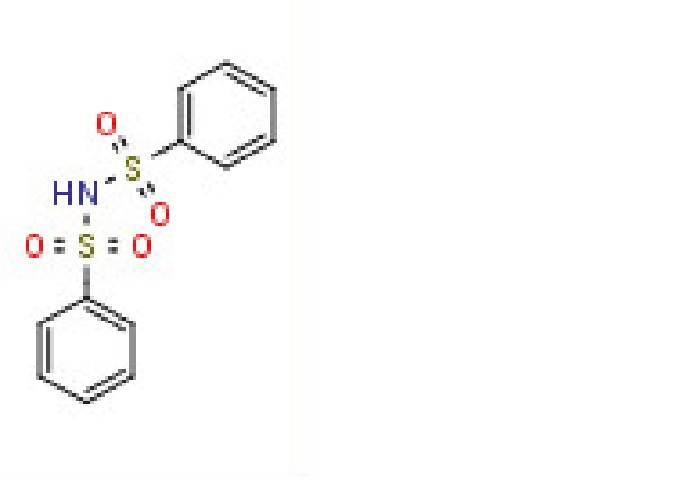
Chemical Name:Dibenzenesulfonimide
Synonyms : N-(Phenylsulphonyl)benzenesulphonamide
CAS No : 2618-96-4
Purity : 98%
MolecularFormula : C12H11NO4S2
Molecular Weight: 297.4
Appearance: SolidA Reliable Intermediate for Chemical SynthesisDibenzene sulfonimide serves as a versatile reagent and building block in the synthesis of pharmaceuticals, dyes, pigments, and other specialized chemicals. Thanks to its stable properties and high purity, it is an ideal choice for both research laboratories and industrial production environments.
Safe and Convenient HandlingThis compound is non-hazardous and non-poisonous under recommended usage, allowing for easier handling in laboratory and factory settings. It is stable under standard conditions and has a shelf life of up to 24 months when stored in a cool, dry place away from moisture and light.
FAQ's of Dibenzene sulfonimide:
Q: How is Dibenzene sulfonimide typically used in chemical synthesis?
A: Dibenzene sulfonimide is used as an intermediate and reagent in the production of pharmaceuticals, dyes, pigments, and other organic compounds due to its strong sulfonimide characteristics and good solubility in polar solvents.
Q: What are the recommended storage requirements for Dibenzene sulfonimide?
A: Store the compound in a cool, dry place away from moisture and light. Proper packaging in plastic or fiber drums helps maintain stability, ensuring a 24-month shelf life.
Q: When should Dibenzene sulfonimide be handled with caution?
A: Although Dibenzene sulfonimide is classified as non-hazardous and non-poisonous under normal laboratory conditions, standard laboratory safety protocols should always be followed to prevent unintended reactions or exposure.
Q: Where can Dibenzene sulfonimide be sourced from in India?
A: It can be obtained through chemical suppliers and traders specializing in intermediates for pharmaceuticals and dyes across India, typically shipped in 25 kg net plastic or fiber drums.
Q: What are the main benefits of using Dibenzene sulfonimide in industrial applications?
A: Key advantages include its high purity (>98%), stability, good solubility in DMSO, and suitability for a wide range of organic synthesis processes, making it an efficient and cost-effective intermediate.
Q: How should Dibenzene sulfonimide be disposed of after use?
A: Unused or residual Dibenzene sulfonimide should be disposed of according to local regulations for non-hazardous laboratory chemicals, and never released into drains or the environment without appropriate treatment.







 Send Inquiry
 Send Inquiry
 Send SMS


