Product Description
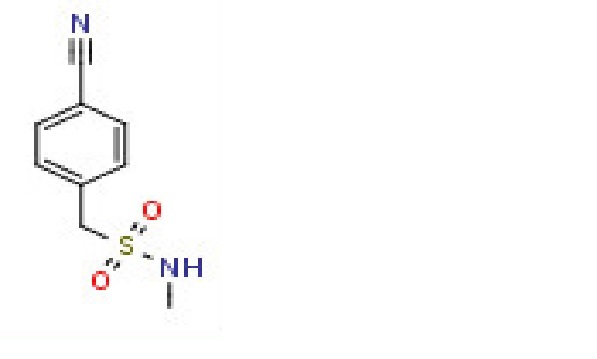
Chemical Name:1-(4-Cyanophenyl)-n-methylmethanesulfonamide
Synonyms : 4-Cyano-N-methyl-benzenemethanesulphonamide
CAS No : 191868-23-2
Purity : 98%
MolecularFormula : C9H10N2O2S
Molecular Weight: 210.3
Appearance: SolidVersatile Pharmaceutical Building Block1-(4-Cyanophenyl)-n-methylmethanesulfonamide serves as a crucial intermediate in the synthesis of active pharmaceutical ingredients. Its reliable stability, high purity (98%), and slight solubility in water or organic solvents like DMSO and methanol make it an optimal choice for researchers and development chemists. The compound's neutral pH and crystalline nature ensure it integrates seamlessly into various medicinal chemistry processes.
Safe and Convenient HandlingThis compound is classified as non-hazardous and non-poisonous under GHS guidelines, offering a safer alternative for chemical handling in research environments. Its solid, odorless, and non-hygroscopic properties reduce handling risks while its packaging options ensure convenience for both small-scale experiments and larger industrial batches. Proper storage ensures long-term integrity and performance.
FAQ's of 1-(4-Cyanophenyl)-n- methylmethanesulfonamide:
Q: How should 1-(4-Cyanophenyl)-n-methylmethanesulfonamide be stored for optimal stability?
A: Store the compound in a tightly closed container in a cool, dry, and well-ventilated area. Keep it away from incompatible substances to maintain its stability for up to 24 months from the date of manufacture.
Q: What is the primary benefit of using this compound in research and synthesis?
A: It acts as a reliable intermediate and building block in medicinal chemistry, facilitating the synthesis of active pharmaceutical ingredients with its high purity and stability.
Q: When should I use this product instead of other pharmaceutical intermediates?
A: Use this compound when you require a stable, non-hazardous, high-purity intermediate with slight solubility in water and good solubility in organic solvents for complex organic or medicinal synthetic pathways.
Q: Where is this product typically applied or utilized?
A: It is commonly used in pharmaceutical research laboratories and chemical manufacturing facilities as a precursor in the synthesis of various active molecules and organic compounds.
Q: What makes handling this product safe for laboratory personnel?
A: It is not classified as hazardous or poisonous under normal handling conditions, is odorless, and is non-hygroscopic, minimizing risk and providing a safer workflow environment in research and industrial applications.
Q: How do I use this compound in my synthesis process?
A: Dissolve it in a compatible solvent such as DMSO or methanol, then incorporate it according to your organic synthesis protocol as an intermediate or building block for target molecules.
Q: Can the packaging size be customized for specific requirements?
A: Yes, available packaging includes 1g, 5g, 10g, and 100g options, and further customization can be arranged to meet particular laboratory or industrial needs.






 Send Inquiry
 Send Inquiry
 Send SMS
 Call Me Free


