Product Description
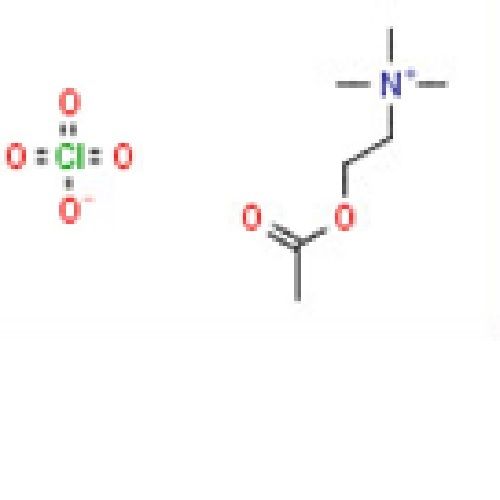
Chemical Name: Acetylcholineperchlorate
Synonyms :(2-Acetoxyethyl)trimethylammonium perchlorate
| Ethanaminium, 2-(acetyloxy)-N,N,N-trimethyl-, perchlorate
| [2-(acetyloxy)ethyl]trimethylazanium perchlorate
Cas No : 927-86-6
Purity : 95%
MolecularFormula : C7H16NO2.ClO4
Molecular Weight :245.7Optimized Storage for Prolonged Shelf LifeProper storage of acetylcholine perchlorate ensures a shelf life of up to two years. Protect the compound from light, air, and moisture by storing it in a sealed container at -20 C. Its highly hygroscopic nature demands care to preserve its stability and prevent unwanted hydrolysis or decomposition.
Versatile Applications in Scientific ResearchAcetylcholine perchlorate is favored for its role in neurochemical research, biochemical studies, and pharmacological experiments. As a neurotransmitter reagent, it supports investigations into nerve impulse transmission, facilitating advanced understanding in medical and biological fields.
Safe Handling and PackagingTo minimize exposure risks, acetylcholine perchlorate is supplied in sealed glass or plastic bottles. Personnel should use personal protective equipment and work under an inert, dry atmosphere to avoid harmful effects and preserve compound integrity. Handling protocols help prevent skin, eye, and respiratory irritation.
FAQ's of Acetylcholine perchlorate:
Q: How should acetylcholine perchlorate be safely handled in a laboratory setting?
A: Use personal protective equipment such as gloves, goggles, and lab coats. Handle the compound under a dry, inert atmosphere and avoid dust formation to minimize exposure and maintain its stability. Ensure all procedures occur away from moisture and light.
Q: What is acetylcholine perchlorate used for in research?
A: It serves as a neurotransmitter reagent in neurochemical studies, biochemical investigations, and pharmacological experiments, particularly for exploring nerve impulse transmission and related biochemical processes.
Q: When can the effectiveness of acetylcholine perchlorate diminish?
A: The compound's effectiveness may decrease if exposed to moisture, light, or air, or if stored above -20 C. Following recommended storage practices preserves its stability and purity for up to two years.
Q: Where should acetylcholine perchlorate be stored to ensure maximum shelf stability?
A: Store it at -20 C, protected from light and moisture in sealed containers. This environment safeguards its high shelf stability and prevents premature decomposition or hydrolysis.
Q: What precautions should be taken regarding incompatibility with other chemicals?
A: Avoid contact with strong oxidizers and moisture, as acetylcholine perchlorate is highly hygroscopic and easily hydrolyzes. These precautions reduce the risk of hazardous reactions and preserve the compound's quality.
Q: Is acetylcholine perchlorate regulated for transport?
A: It is typically non-regulated for transport under most conditions, making it convenient for commercial and research shipments. Sellers package it securely to prevent environmental exposure.
Q: What are the benefits of using acetylcholine perchlorate in experimental protocols?
A: Its high purity, rapid solubility in water and ethanol, and stable chemical profile under recommended conditions make it a reliable choice for precise and repeatable scientific results.






![3-(([5-(Azepan-1-ylcarbonyl)-1,2,4-oxadiazol-3-yl]methyl)thio)propanoic acid](https://cpimg.tistatic.com/10045427/b/4/3-5-Azepan-1-ylcarbonyl-1-2-4-oxadiazol-3-yl-methyl-thio-propanoic-acid.jpg?tr=w300)
 Send Inquiry
 Send Inquiry
 Send SMS
 Call Me Free


