Product Description
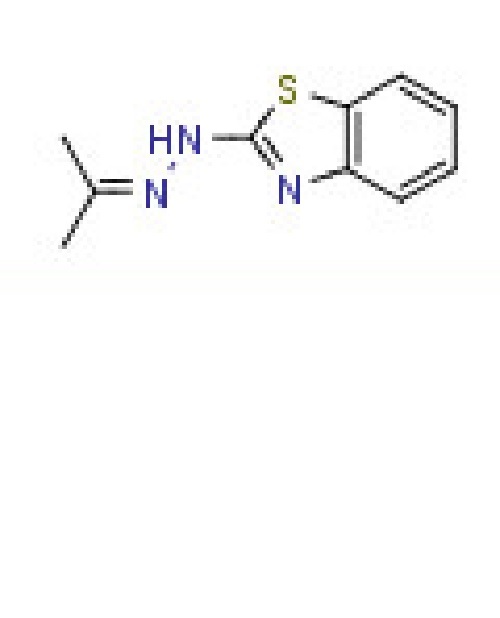
Chemical name: Acetone-benzothiazolyl-2-hydrazone
Synonyms: AcetoneBenzothiazolyl-2-hydrazone
Cas no: 6277-26-5
Purity:95%
Molecular formula: C10H11N3S
Molecular Weight: 205.3
High-Quality Laboratory GradeABTH is offered in laboratory grade with minimum 99% purity, ensuring precise results in chemical research and analytical studies. Its conformance to stringent laboratory standards guarantees consistent, reliable performance for a variety of scientific applications.
Safe Handling and StorageTo ensure both safety and long-term stability, this chemical should be stored in a cool, dry environment, away from light and oxidizing agents. Always handle using appropriate personal protective equipment like gloves and safety goggles, as ABTH is classified as an irritant.
Versatile ApplicationsAcetone-benzothiazolyl-2-hydrazone finds use mainly as a laboratory reagent and a chemical intermediate in synthesis. Its excellent stability under proper conditions and unique chemical properties make it valuable for advanced research and analytical chemistry tasks.
FAQ's of Acetone-benzothiazoly l-2-hydrazone:
Q: How should Acetone-benzothiazolyl-2-hydrazone be stored for maximum stability?
A: Store the compound in a cool, dry place, away from light and strong oxidizers. Proper storage under these recommended conditions helps maintain its stability for up to 24 months.
Q: What is the primary use of ABTH in laboratory settings?
A: ABTH is mainly used as a laboratory reagent and as an intermediate in chemical syntheses, particularly in research and analytical chemistry applications.
Q: What are the necessary precautions when handling Acetone-benzothiazolyl-2-hydrazone?
A: Since ABTH is classified as an irritant, it is important to avoid contact with skin and eyes and use personal protective equipment such as gloves and safety goggles during handling.
Q: When does Acetone-benzothiazolyl-2-hydrazone decompose, and what is its melting point?
A: Acetone-benzothiazolyl-2-hydrazone melts at 215-218C and decomposes at temperatures above 220C, before reaching its boiling point.
Q: Where is ABTH typically applied, and what benefits does it offer researchers?
A: ABTH is used in research laboratories as a reagent and intermediate. Its high purity and chemical stability provide reliable and reproducible results essential for rigorous scientific studies.
Q: What is the compatibility of Acetone-benzothiazolyl-2-hydrazone with other chemicals?
A: ABTH is incompatible with strong oxidizing agents and should not be stored or mixed with such substances to prevent hazardous reactions.







![2- Amino-6,7-dihydro-5h-thiazolo[5,4-b]pyridine-4-carboxylic acid tert-butyl ester](https://cpimg.tistatic.com/11935207/b/4/2-Amino-6-7-dihydro-5h-thiazolo-5-4-b-pyridine-4-carboxylic-acid-tert-butyl-ester.jpg?tr=w300)
 Send Inquiry
 Send Inquiry
 Send SMS
 Call Me Free


