Product Description
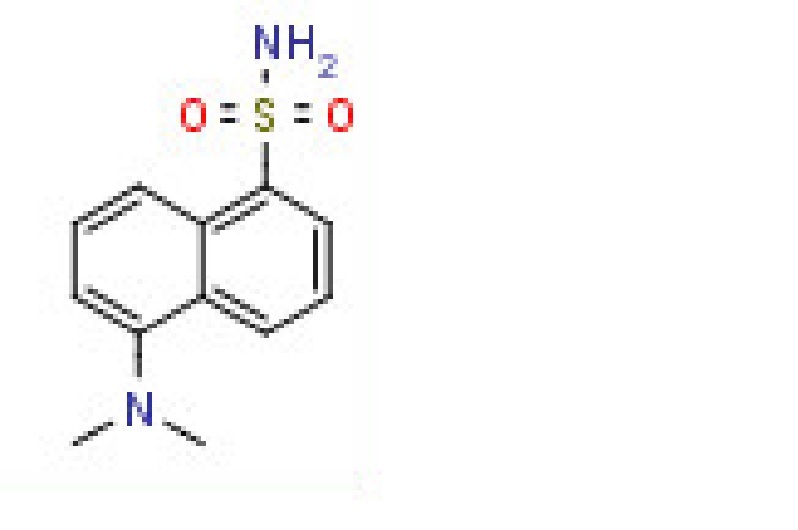
Chemical Name: 5-Dimethylamino-1-naphthalenesulfonamide
Synonyms : 5-(dimethylamino)naphthalene-1-sulfonamide
CAS No : 1431-39-6
Purity : 98%
MolecularFormula : C12H14N2O2S
Molecular Weight:250.3
Appearance : SolidVersatile Fluorescent Dye PrecursorDansylamide (5-Dimethylamino-1-naphthalenesulfonamide) stands out for its effectiveness in fluorescence labeling, serving as a precursor for marker dyes in a variety of research and synthesis applications. Its strong solubility in water and organic solvents, combined with high stability and purity, makes it ideal for sensitive analytical tasks.
Safe Handling and Easy StorageThis compound is classified as non-hazardous and not regulated for transport, simplifying handling and logistics. For optimal preservation, store the tightly sealed product in a cool, dry, well-ventilated environment, away from direct light. The product remains stable for up to three years under recommended storage conditions.
FAQ's of 5-Dimethylamino-1- naphthalenesulfonamide:
Q: How should 5-Dimethylamino-1-naphthalenesulfonamide be stored for maximum shelf life?
A: Store the compound in its original sealed bottle or pouch in a cool, dry, well-ventilated place away from light. Under these conditions, its shelf life is up to three years.
Q: What are the primary uses and benefits of this product in laboratory settings?
A: This compound is primarily used as a fluorescent dye precursor for labeling and detection, in chemical synthesis, and in biochemical research. Its high purity and water solubility enhance its effectiveness and reliability in experimental applications.
Q: When is it appropriate to use Dansylamide over other fluorescent dyes or precursors?
A: Choose Dansylamide when high purity, water solubility, and compatibility with organic solvents are essential, especially for sensitive fluorescence labeling tasks in analytical or biochemical research.
Q: Where can 5-Dimethylamino-1-naphthalenesulfonamide be applied beyond fluorescence studies?
A: Besides fluorescence labeling, it is employed in chemical synthesis, as a marker dye in various processes, and for biochemical assays in industries like pharmaceuticals and life sciences.
Q: What is the process for safely handling and disposing of this compound?
A: Handling is straightforward since the material is non-hazardous and stable; use standard laboratory safety precautions. Dispose of in accordance with local regulations for non-hazardous chemical waste.
Q: Is this compound poisonous or hazardous under normal usage conditions?
A: The product is classified as non-poisonous and not hazardous under recommended usage. It does not require any special regulatory adherence or labeling during transit or handling.






 Send Inquiry
 Send Inquiry
 Send SMS


