Product Description
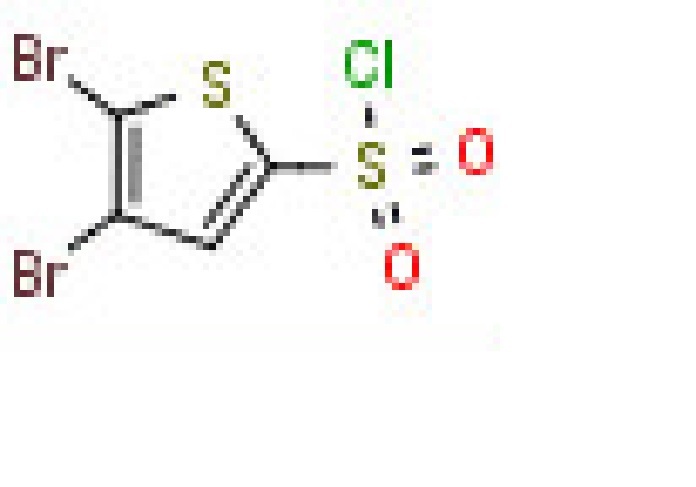
Chemical Name:4,5-Dibromothiophene-2-sulfonyl chloride
Synonyms : 2,3-Dibromothiophene-5-sulfonylchloride
CAS No : 81606-31-7
Purity : 95%
MolecularFormula : C4HBr2ClO2S2
Molecular Weight: 340.4
Versatile Intermediate for Chemical Synthesis4,5-Dibromothiophene-2-sulfonyl chloride serves as a key building block in the synthesis of various heterocyclic compounds. Its reactivity and high purity make it indispensable in pharmaceutical and agrochemical research as well as organic synthesis, where precise chemical transformations are required.
Strict Handling and Storage GuidelinesDue to its corrosive and moisture-sensitive nature, 4,5-Dibromothiophene-2-sulfonyl chloride must be handled with appropriate protective gear. It is important to keep the container tightly closed and store it in a cool, dry, well-ventilated place, well protected from moisture to ensure product stability and safety.
Safe and Compliant TransportationThis compound is classified as hazardous (UN 3261) and is transported according to local, national, and international regulations. Secure packaging in sealed glass bottles or HDPE containers is required to prevent leakage and exposure, ensuring safety throughout the supply chain.
FAQ's of 4,5-Dibromothiophene-2-sulfonyl chloride:
Q: How should 4,5-Dibromothiophene-2-sulfonyl chloride be safely handled and stored?
A: This chemical should be handled with suitable protective equipment, avoiding direct contact with skin, eyes, or clothing. Store it in a tightly closed container made of glass or HDPE, in a cool, dry, and well-ventilated area, and always protect it from moisture to preserve its stability.
Q: What are the recommended uses and benefits of this compound?
A: 4,5-Dibromothiophene-2-sulfonyl chloride is used as an intermediate in the synthesis of various heterocyclic compounds, making it valuable in pharmaceutical development, agrochemical research, and other organic syntheses.
Q: When does the product decompose, and what are its decomposition products?
A: The compound decomposes before reaching its boiling point. On decomposition, it can release hazardous gases such as hydrogen bromide, sulfur oxides, and hydrochloric acid. Handle and dispose of the material following proper safety procedures.
Q: Where is this compound typically applied in the industry?
A: It is chiefly used in the pharmaceutical and agrochemical sectors, as well as organic synthesis laboratories, where it functions as an essential reagent for building complex molecular structures.
Q: What precautions should be taken during transportation?
A: Transport 4,5-Dibromothiophene-2-sulfonyl chloride in compliance with UN 3261 regulations, using sealed glass bottles or HDPE containers. Ensure package integrity to avoid leaks, and follow all local and international guidelines for hazardous materials.
Q: How long can this product be stored without loss of quality?
A: When properly stored away from moisture and in recommended environmental conditions, the product maintains its quality for up to 12 months.
Q: What should be done if the compound comes into contact with water?
A: Since it reacts violently with water, avoid all contact. If accidental exposure occurs, evacuate the area and contain the spill with compatible absorbent material. Seek advice from hazardous material professionals for cleanup.








 Send Inquiry
 Send Inquiry
 Send SMS


