Product Description
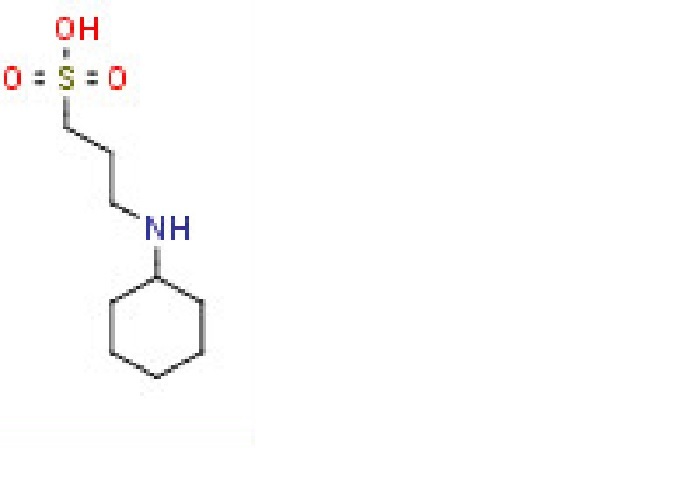
Chemical Name:3-(Cyclohexylamino)propane-1-sulfonic acid
Synonyms : 3-(Cyclohexylamino)-1-propanesulfonic acid
N-Cyclohexyl-3-aminopropanesulfonicacid
CAS No : 1135-40-6
Purity : 96%
MolecularFormula : C9H19NO3S
Molecular Weight: 221.3
Appearance: SolidWidely Used Buffer for Biochemical ApplicationsCAPS Buffer is renowned for its stable pH in the alkaline range (9.3-10.5), high water solubility, and minimal interaction with biological systems. It is a preferred choice for protein purification, electrophoresis, and enzymatic reactions where precise pH control is critical. The product's stability and ease of use make it a staple in research laboratories.
Safe and Reliable Chemical HandlingWith no significant environmental hazards and compliance with chemical safety standards, CAPS Buffer offers a safe solution for laboratory applications. Non-hazardous under normal conditions, it should still be handled with care, avoiding inhalation or contact with skin and eyes. The buffer remains stable for up to 24 months when stored in a cool, dry place in sealed containers.
FAQ's of 3-(Cyclohexylamino)propane-1-sulfonic acid:
Q: How is 3-(Cyclohexylamino)propane-1-sulfonic acid (CAPS Buffer) typically used in the laboratory?
A: CAPS Buffer is mainly used as a buffering agent for biological and biochemical experiments, such as electrophoresis, protein purification, and enzymatic reactions. It helps maintain stable alkaline pH conditions between 9.3 and 10.5.
Q: What are the benefits of using CAPS Buffer over other buffering agents?
A: CAPS Buffer provides excellent pH stability in the alkaline range and has high solubility in water, minimizing interference with biological systems. Its high purity and consistent performance make it ideal for sensitive research applications.
Q: When should I use CAPS Buffer in my experiments?
A: CAPS Buffer is suitable when you require a stable buffer in the alkaline pH range, especially for protein or enzyme work, or during electrophoresis. Its zwitterionic nature makes it well-suited to processes that demand minimal ionic interference.
Q: Where should CAPS Buffer be stored to maintain its stability?
A: Store CAPS Buffer in a cool, dry environment with the container tightly sealed. Proper storage will maintain its stability and effectiveness for up to 24 months.
Q: What handling precautions should be taken with CAPS Buffer?
A: While CAPS Buffer is not considered hazardous under normal conditions, it is advisable to avoid inhalation as well as contact with skin and eyes. Standard laboratory protective equipment is recommended during handling.
Q: Is CAPS Buffer compatible with most laboratory reagents?
A: Yes, CAPS Buffer is compatible with most commonly used laboratory reagents, ensuring flexibility in various experimental protocols.






 Send Inquiry
 Send Inquiry
 Send SMS
 Call Me Free


