Product Description
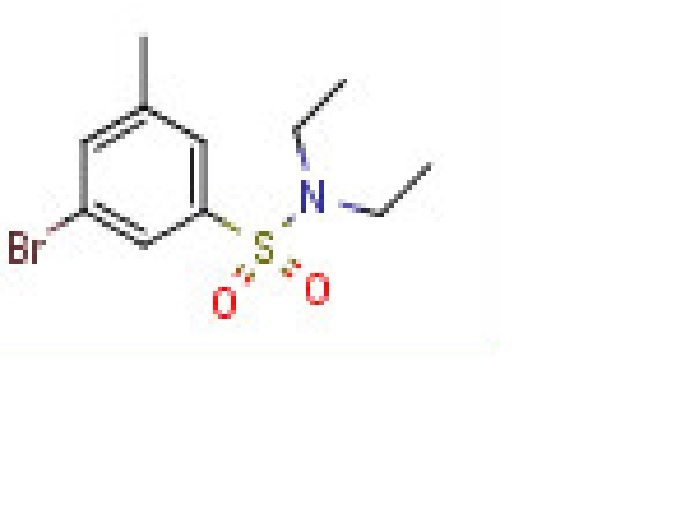
Chemical Name:N,N-Diethyl 3-bromo-5-methylbenzenesulfonamide
Synonyms : 3-Bromo-N,N-diethyl-5-methylbenzenesulfonamide
CAS No : 1020252-94-1
Purity : 98%
MolecularFormula :C11H16BrNO2S
Molecular Weight: 306.2
Appearance : SolidPremium Quality for Research and SynthesisN,N-Diethyl 3-bromo-5-methylbenzenesulfonamide is supplied as a high-purity, stable crystalline powder, ideal for use in chemical synthesis, research, and pharmaceutical intermediate applications. Its consistency and high grade meet laboratory and industrial requirements, making it a dependable choice for scientific and developmental work.
Safe and Convenient StorageThis compound is non-hygroscopic and has a shelf life of 24 months when stored in a cool, dry place at 2-8C inside its tightly sealed original packaging. Its chemical stability under these conditions maximizes research reliability and minimizes waste.
Flexible Packaging and HandlingOffered in a variety of packaging sizes-25 g, 100 g, 500 g, and 1 kg-this product caters to different research and development scales. Classified as non-dangerous for transport and not hazardous under GHS, it is convenient to handle and ship, enhancing user experience and safety.
FAQ's of N,N-Diethyl 3-bromo-5-methylbenzenesulfonamide:
Q: How should N,N-Diethyl 3-bromo-5-methylbenzenesulfonamide be stored to maintain its quality?
A: Store the compound between 2-8C in a tightly closed original container in a cool, dry environment. This ensures its stability and preserves its quality for up to 24 months.
Q: What safety precautions should be taken when handling this substance?
A: Wear appropriate protective equipment, such as gloves and goggles. Avoid generating dust and ensure good ventilation during handling. While not classified as hazardous, it should still be managed with standard laboratory care.
Q: What is the primary application of this chemical?
A: N,N-Diethyl 3-bromo-5-methylbenzenesulfonamide is primarily used as a pharmaceutical intermediate and in chemical synthesis for research and development. It is intended strictly for laboratory use and not for direct human consumption.
Q: When might I need to consider decomposition byproducts?
A: In the case of fire or excessive heat, the compound may decompose, emitting toxic fumes such as bromine, sulfur oxides, and nitrogen oxides. Appropriate fire safety measures and proper ventilation should be used in such scenarios.
Q: Where is the product manufactured and supplied from?
A: This compound is typically supplied and traded from India, with availability in several packaging sizes to fulfill research and industrial requirements.
Q: What benefits does this compound offer for research and synthesis projects?
A: Its high purity (98%), physical stability, and convenient handling-combined with non-hygroscopic and odorless properties-make it advantageous for consistent, reliable research outcomes and versatile synthesis applications.
Q: Can this compound be transported and stored easily?
A: Yes, it is classified as non-dangerous for transport and not hazardous under GHS guidelines. Proper storage as recommended allows for safe handling and logistics.






 Send Inquiry
 Send Inquiry
 Send SMS
 Call Me Free


