Product Description
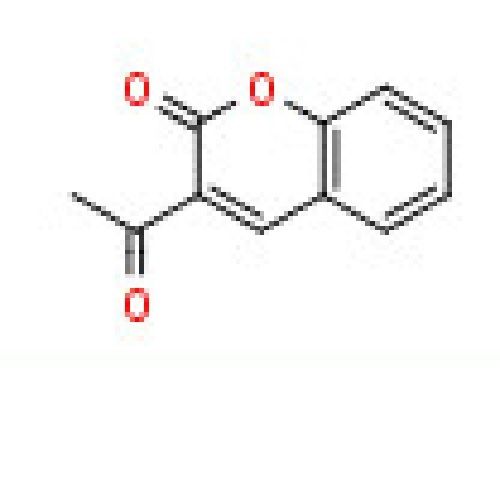
Chemical Name: 3-Acetylcoumarin
Synonyms :3-Acetyl-2H-chromen-2-one
| 3-acetylchromen-2-one
| Coumarin, 3-acetyl-
Cas No : 3949-36-8
Purity : 98%
MolecularFormula : C11H8O3
Molecular Weight:188.2
Appearance: SolidSuperior Quality and Stability3-Acetylcoumarin is offered in pharmaceutical and analytical grade, ensuring high purity of over 98%. As a crystalline solid, it remains stable under proper storage-cool, dry, and protected from light. Its shelf life is up to 24 months, preserving its effectiveness for research and industrial needs.
Diverse Applications in Research and IndustryThis compound is extensively used as an intermediate in the synthesis of anticoagulant medications, organic synthesis, and various laboratory studies. Its solubility in organic solvents like ethanol and acetone makes it ideal for complex chemical processes, while its stability supports consistent experimental outcomes.
Safe Packaging and Handling3-Acetylcoumarin is packaged in tightly sealed containers, available in 25g, 100g, or custom sizes upon request. Although considered non-poisonous, it should be handled with care, using appropriate protective measures to avoid irritation to skin, eyes, or respiratory tract.
FAQ's of 3- Acetylcoumarin:
Q: How should 3-Acetylcoumarin be stored for maximum shelf life?
A: To maintain its quality and effectiveness, 3-Acetylcoumarin should be stored in a cool, dry, and well-ventilated area, away from light. Under these conditions, the compound remains stable and retains a shelf life of up to 24 months.
Q: What are the main uses of 3-Acetylcoumarin in pharmaceutical research?
A: 3-Acetylcoumarin serves as an important intermediate in the preparation of anticoagulant drugs, as well as in general organic synthesis and laboratory research. Its high purity and stability make it a reliable choice for scientific applications.
Q: When does 3-Acetylcoumarin decompose, and what precautions should be taken when heating?
A: 3-Acetylcoumarin decomposes before reaching its boiling point, so direct heating should be avoided. When involved in processes that require elevated temperatures, care should be taken to stay below its decomposition threshold and keep handling in a controlled, ventilated environment.
Q: Where can 3-Acetylcoumarin typically be obtained and in what packaging sizes?
A: 3-Acetylcoumarin is supplied by reliable traders and suppliers in India, packaged in sealed containers of standard 25g or 100g, with custom quantities available on request for research or industrial needs.
Q: What is the recommended process for handling 3-Acetylcoumarin safely in the laboratory?
A: When working with 3-Acetylcoumarin, it is advisable to use gloves, eye protection, and adequate ventilation to minimize exposure. The compound may cause mild irritation to the skin, eyes, or respiratory tract if not handled properly.
Q: Which solvents can be used to dissolve 3-Acetylcoumarin for chemical synthesis?
A: 3-Acetylcoumarin is soluble in organic solvents such as ethanol and acetone, but insoluble in water. Choosing the appropriate solvent is key for successful reactions and processes in the laboratory.
Q: What are the benefits of using 3-Acetylcoumarin in chemical synthesis?
A: Its high purity and consistent crystalline form enable precise reactions, making it especially beneficial for developing pharmaceutical compounds and conducting reproducible research in organic chemistry.






![3-(Aminomethyl)-1-[(tert-butoxy)carbonyl]azetidine-3-carboxylic acid hydrochloride](https://cpimg.tistatic.com/09922285/b/4/3-Aminomethyl-1-tert-butoxy-carbonyl-azetidine-3-carboxylic-acid-hydrochloride.jpg?tr=w300)
![2-Amino-7h-pyrrolo[2,3-d]pyrimidin-6-carboxylic acid methyl ester](https://cpimg.tistatic.com/09972922/b/4/2-Amino-7h-pyrrolo-2-3-d-pyrimidin-6-carboxylic-acid-methyl-ester.jpg?tr=w300)
 Send Inquiry
 Send Inquiry
 Send SMS
 Call Me Free


