Product Description
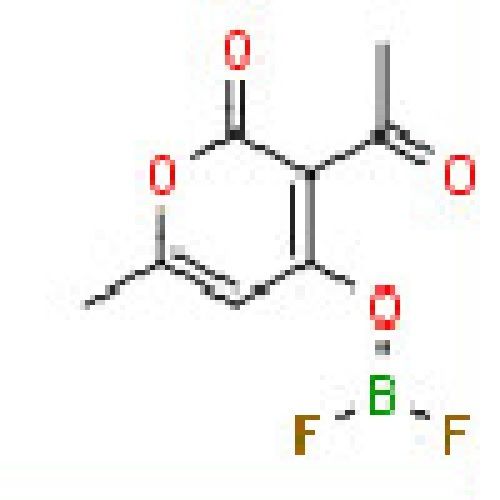
Chemical Name: 3-Acetyl-6-methyl-2-oxo-2h-pyran-4-yldifluoridoborate
Synonyms :3-acetyl-6-methyl-2-oxo-2H-pyran-4-yl difluoridoborate
|3-acetyl-4-difluoroboranyloxy-6-methylpyran-2-one
Cas No : 67977-10-0
Purity : 95%
MolecularFormula : C8H7BF2O4
Molecular Weight :215.9Moisture Sensitivity and StabilityThis compound exhibits strong sensitivity to ambient humidity and decomposes when exposed to moisture. Ensuring a tightly closed container, ideally under an inert atmosphere, optimizes shelf life up to two years. The product remains stable when kept dry and cool, making it reliable for specialized laboratory applications.
Applications in Research and SynthesisWidely utilized in pharmaceutical research, organic synthesis, and as a chemical intermediate, this compound offers advantages in controlled chemical reactions where stability and purity are crucial. Its predictable performance under recommended conditions enhances laboratory and R&D outcomes.
Safe Storage, Handling, and PackagingSealed glass or plastic bottles provided under inert conditions protect the integrity of the sample. For maximum safety, store at 2-8C in a dry, well-ventilated area. Protective clothing and gloves are advised during handling to minimize skin and eye irritation, as indicated by the product's GHS hazard codes.
FAQ's of 3-Acetyl-6-methyl-2-oxo-2h-pyran-4-yl difluoridoborate:
Q: How should 3-Acetyl-6-methyl-2-oxo-2H-pyran-4-yl difluoridoborate be stored to maintain its stability?
A: Store the compound in tightly closed containers at 2-8C, in a dry, well-ventilated setting, and preferably under an inert atmosphere to prevent decomposition from moisture.
Q: What precautions are necessary when handling this chemical in the laboratory?
A: It is important to wear suitable protective clothing and gloves, avoid inhalation, and prevent contact with skin or eyes due to its irritant properties (GHS codes H315, H319). Handle only in well-ventilated areas.
Q: When does the compound begin to decompose and what are the implications for its use?
A: The product decomposes before reaching its boiling point and is sensitive to moisture, which restricts its use to dry, controlled laboratory environments for optimal performance.
Q: What benefits does this compound offer in organic synthesis or pharmaceutical research?
A: Its high purity and stable behavior in dry conditions make it particularly valuable for precise chemical reactions, improving reproducibility and reliability in research and development applications.
Q: Where can I find structural information or further data about this product?
A: The molecular formula (C8H7BF2O4), CAS number (134218-15-4), InChI Key, and chemical structure image are provided by suppliers and traders in India for detailed reference.
Q: Is the chemical classified as dangerous for transport, and how is it usually packed?
A: This compound is not regulated as dangerous goods for transportation and is generally shipped in securely sealed glass or plastic bottles under an inert atmosphere to prevent moisture exposure.






![(1R*,2S*,4S*)-7-Aza-bicyclo[2.2.1]heptane-2-carboxylic acid hydrobromide](https://cpimg.tistatic.com/10032273/b/4/-1R-2S-4S-7-Aza-bicyclo-2-2-1-heptane-2-carboxylic-acid-hydrobromide.jpg?tr=w300)
 Send Inquiry
 Send Inquiry
 Send SMS
 Call Me Free


