Product Description
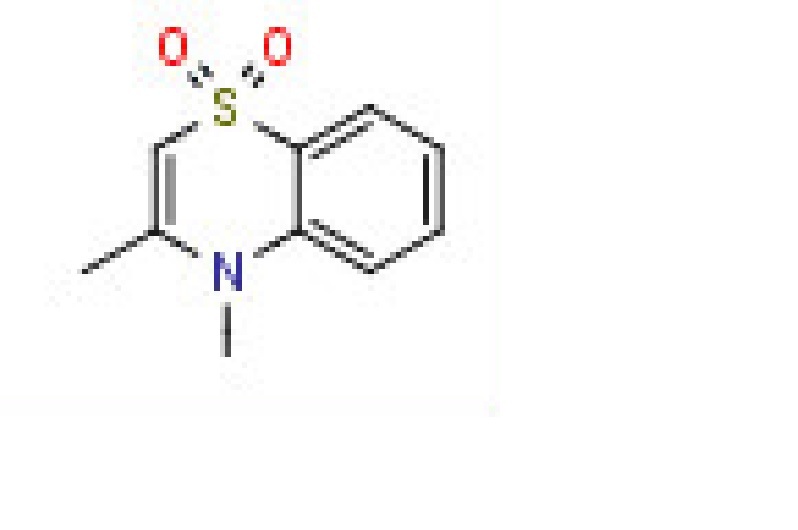
Chemical Name:3,4-Dimethyl-(4H)1,4-benzothiazine-1,1-dioxide
Synonyms : 3,4-dimethyl-1lambda6,4-benzothiazine1,1-dioxide
CAS No : 1951440-11-1
Purity : 98%
MolecularFormula : C10H11NO2S
Molecular Weight:209.3
Appearance : SolidVersatile Applications in SynthesisThis compound is widely valuable as an intermediate for organic synthesis, pharmaceutical development, and dye manufacturing. Its high purity and reagent-grade quality make it an essential component in research and industrial laboratories, supporting a range of experimental and production processes.
Safe Handling and Reliable Packaging3,4-Dimethyl-(4H)1,4-benzothiazine-1,1-dioxide comes in sealed HDPE bottles, safeguarding it from external contaminants and moisture. While classified as non-hazardous for transport, it is recommended to use personal protective equipment and to prevent dust formation during handling for optimum safety.
Efficient Storage and StabilityDemonstrating impressive stability when stored in a cool, dry, and well-ventilated setting, this compound retains its properties for up to 24 months in its original packaging. Its crystalline form and density of 1.27 g/cm ensure easy handling and integration into laboratory workflows.
FAQs of 3,4-Dimethyl-(4H)1,4-benzothiazine-1,1- dioxide:
Q: How should 3,4-Dimethyl-(4H)1,4-benzothiazine-1,1-dioxide be stored for optimal stability?
A: The compound should be stored in its original, tightly sealed HDPE container in a cool, dry, and well-ventilated place. Avoid exposure to direct light and moisture to maintain its purity and effectiveness for up to 24 months.
Q: What are the primary uses of this compound in the laboratory?
A: It serves as an intermediate in organic synthesis, pharmaceutical research, and dye manufacturing. Its high purity and reagent grade make it suitable for complex chemical reactions and specialized industrial applications.
Q: When is it recommended to use personal protective equipment (PPE) with this chemical?
A: Personal protective equipment should be used anytime you are handling the compound, especially to prevent skin or eye contact and to avoid inhaling dust. This is consistent with standard laboratory safety procedures.
Q: Where is this product typically packaged and supplied?
A: This compound is available from suppliers and traders in India, where its commonly packaged in sealed HDPE bottles with quantities of 25g, 100g, or 500g to meet laboratory and industrial requirements.
Q: What benefits does this chemical provide to researchers and manufacturers?
A: Its reliable stability, high purity, and versatility as an intermediate make it invaluable for research, pharmaceutical formulation, and dye synthesis, supporting consistent results in experimental and industrial processes.
Q: What precautions should be taken during transport and storage?
A: Though not classified as hazardous for transport, containers should remain sealed, protected from moisture, and stored away from direct sunlight. Handle with care to avoid dust formation and potential contamination.
Q: How is this product used in organic synthesis?
A: It acts as a key intermediate, facilitating the construction of more complex molecules required in pharmaceuticals and dyes. Its chemical stability and reactivity under controlled conditions enhance synthesis efficiencies.






![2,3-Dihydro-benzo[1,4]dioxine-6-sulfonic acid amide](https://cpimg.tistatic.com/11241797/b/4/2-3-Dihydro-benzo-1-4-dioxine-6-sulfonic-acid-amide.jpg?tr=w300)
 Send Inquiry
 Send Inquiry
 Send SMS


