Product Description
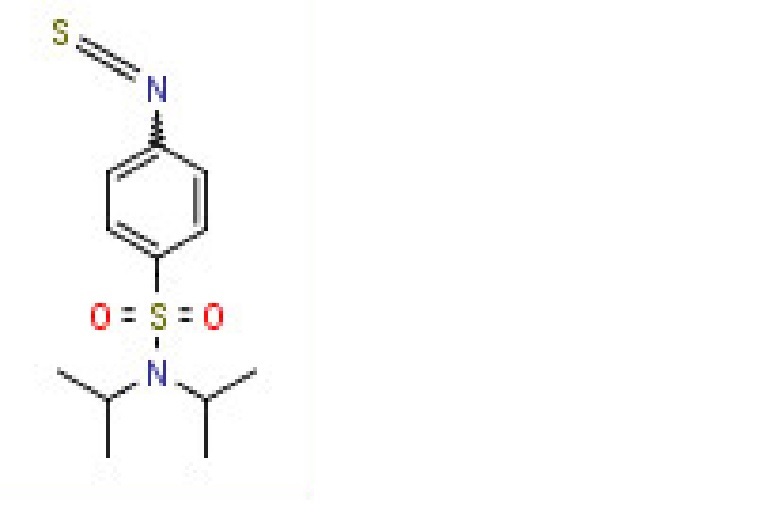
Chemical Name: N,N-Diisopropyl-4-isothiocyanatobenzenesulfonamide
Synonyms : 4-isothiocyanato-N,N-di(propan-2-yl)benzenesulfonamide
CAS No : 956576-76-4
Purity : 95%
MolecularFormula :C13H18N2O2S2
Molecular Weight:298.4
A Versatile Intermediate for LaboratoriesN,N-Diisopropyl-4-isothiocyanatobenzenesulfonamide is mainly used as a research chemical and intermediate in laboratory settings, including pharmaceutical and organic synthesis. Its high purity and stable nature make it a preferred choice for researchers requiring reliable reagents for complex chemical projects.
Safe Handling and Storage RecommendationsFor optimal product longevity, store this compound in tightly sealed HDPE containers placed in cool, dry, and well-ventilated areas, away from moisture and incompatible substances. Use personal protective equipment when handling, as the product may cause irritation and can be harmful if swallowed or inhaled.
FAQ's of N,N-Diisopropyl-4- isothiocyanatobenzenesulfonamide:
Q: How should N,N-Diisopropyl-4-isothiocyanatobenzenesulfonamide be safely handled and stored?
A: Handle this compound with personal protective equipment, including gloves and safety eyewear. Store it in a tightly closed HDPE container in a cool, dry, well-ventilated area, away from moisture and incompatible materials to ensure stability.
Q: What are the main applications and benefits of using this chemical?
A: It is widely used as an intermediate in organic synthesis, pharmaceutical research, and various chemical processes, providing researchers with a reliable, high-purity reagent for advanced laboratory applications.
Q: When does this compound require replacement or disposal?
A: The compound remains stable and effective for two years under recommended storage conditions. If it shows signs of contamination, decomposition, or has expired, it should be disposed of following laboratory waste protocols and environmental guidelines.
Q: Where is this product typically utilized?
A: N,N-Diisopropyl-4-isothiocyanatobenzenesulfonamide is mainly used in research laboratories, chemical development facilities, and pharmaceutical synthesis across academic, industrial, and scientific institutions.
Q: What is the process for dissolving and using this compound in experiments?
A: The powder dissolves readily in organic solvents such as DMSO or DMF, making it convenient for use in solution-based chemical reactions. Water is not suitable due to the compound's insolubility.
Q: Is the product hazardous for transport or the environment?
A: Under standard conditions, it is classified as non-hazardous for air, sea, and road transport and is not assigned a UN number. However, avoid its release into the environment and refer to the MSDS for specific guidance.
Q: What are the precautions regarding toxicity and working safely with this reagent?
A: While non-flammable and non-corrosive, the compound may be harmful if ingested or inhaled. Always use local exhaust ventilation, avoid direct contact, and handle according to your facility's safety protocols to minimize exposure risks.







 Send Inquiry
 Send Inquiry
 Send SMS
 Call Me Free


