Product Description
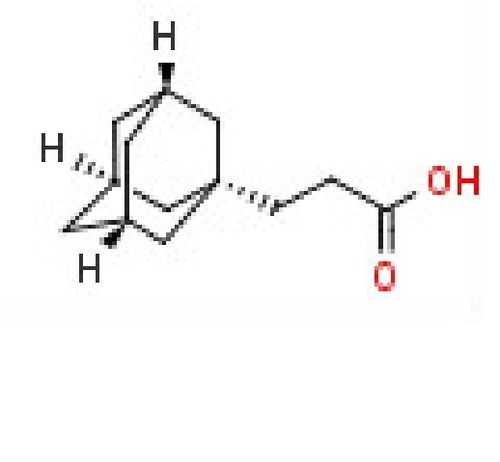
Chemical Name: 3-(1-Adamantyl)propanoicacid
Synonyms :3-(adamantan-1-yl)propanoic acid
| 1-Adamantanepropanoic acid
| 3-(Adamant-1-yl)propanoic acid
Cas No : 16269-16-2
Purity : 95%
MolecularFormula : C13H20O2
Molecular Weight: 208.3
Appearance:SolidApplications in Research and Industry3-(1-Adamantyl)propanoic acid is utilized primarily as a chemical intermediate in pharmaceutical research and synthesis. Its unique adamantane-based structure provides valuable characteristics for compound development. Researchers often choose this molecule for analytical studies and experimental procedures due to its stability and high purity.
Storage and Handling GuidelinesTo maximize shelf life and maintain chemical integrity, store the compound in a tightly closed container within a cool, dry environment at 2-8C. Proper storage prevents contamination and preserves quality for up to 24 months. The crystalline powder is odorless, non-poisonous, and packaged in sealed glass or plastic containers for safety.
Safety and Regulatory InformationThis substance conforms to laboratory chemical regulations and is classified as non-hazardous for air, sea, and road transport. Handling precautions include minimizing skin, eye, and respiratory contact as it may cause mild irritation. Always use standard laboratory safety practices while working with this compound.
FAQ's of 3-(1-Adamantyl)propanoic acid:
Q: How should 3-(1-Adamantyl)propanoic acid be stored for maximum stability?
A: Store the compound at a temperature between 2-8C in a tightly closed container placed in a cool, dry environment. This ensures stability and preserves its crystalline nature for up to 24 months.
Q: What are the primary applications and benefits of using this compound in research?
A: 3-(1-Adamantyl)propanoic acid is mainly used as a pharmaceutical intermediate and in chemical research. Its adamantane skeleton offers structural uniqueness, aiding in the development of novel compounds and analytical processes.
Q: When is this product considered non-hazardous for transport?
A: The compound is classified as non-hazardous under standard laboratory chemical regulations, making it suitable for air, sea, and road transport without special restrictions.
Q: Where can impurities be expected to fall in commercially available samples?
A: Commercial samples of this chemical typically have impurities below 2%, ensuring a purity level greater than 98%. This meets research and analytical grade requirements.
Q: What process is recommended for safe handling and usage in laboratories?
A: Use standard laboratory personal protective equipment, such as gloves and eyewear, to minimize exposure. Handle the powder in a well-ventilated area and prevent direct contact with skin, eyes, or respiratory tract due to its mild irritant properties.
Q: What USP does this compound offer compared to other propanoic acids?
A: The adamantane skeleton in 3-(1-Adamantyl)propanoic acid imparts enhanced stability and structural versatility, which is beneficial for advanced chemical synthesis and innovative research.







 Send Inquiry
 Send Inquiry
 Send SMS


