Product Description
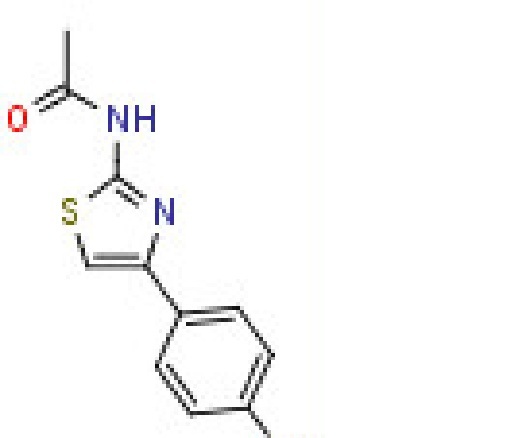
Chemical name:N-[4-(4-Hydroxyphenyl)-1,3-thiazol-2-yl]acetamide
Synonyms: N-[4-(4-Hydroxyphenyl)-1,3-thiazol
Cas no: 64309-02-0
Purity: 95%
Molecular formula: C11H10N2O2S
Molecular Weight:234.3Key Applications in Research2-Acetamido-4-(4-hydroxyphenyl)thiazole is widely employed as an intermediate in pharmaceutical synthesis, as well as a specialized reagent in organic chemistry investigations. Its stable, crystalline form ensures reliability for diverse laboratory experiments, facilitating the exploration and development of innovative chemical compounds.
Optimal Storage and HandlingFor best results, this compound should be stored in tightly sealed, moisture-proof containers at temperatures between 28C and protected from light. Adhering to proper laboratory practices during handling is essential, as the stability and purity depend on avoiding exposure to humidity and light, preserving the substances integrity over its 24-month shelf life.
FAQs of 2-Acetamido-4- (4-hydroxyphenyl)thiazole:
Q: How should 2-Acetamido-4-(4-hydroxyphenyl)thiazole be stored for maximum stability?
A: Store the compound in a cool, dry place at 2-8C, sealed in moisture-proof packaging, and protected from light to maintain its stability for up to 24 months.
Q: What are the recommended safety precautions when handling this chemical?
A: Since specific hazard data is unavailable, it is important to handle the compound in accordance with standard laboratory safety protocols, including wearing appropriate PPE and preventing exposure to moisture and light.
Q: When is this compound typically used in chemical research?
A: It is primarily used as an intermediate in organic synthesis and pharmaceutical research settings, suitable for laboratory research and development applications only.
Q: What is the process for dissolving this compound for laboratory experiments?
A: 2-Acetamido-4-(4-hydroxyphenyl)thiazole is slightly soluble in water but dissolves effectively in DMSO or ethanol, making these solvents preferable for preparing experimental solutions.
Q: Where can laboratory professionals obtain additional structural information about this reagent?
A: Further structural and regulatory details can be accessed through chemical databases using its CAS No. 7454-87-3 or EINECS No. 231-239-5.
Q: What benefit does its high purity offer for research?
A: With a purity greater than 98%, the compound ensures minimal contaminants, leading to more reliable results in sensitive laboratory and synthetic procedures.






 Send Inquiry
 Send Inquiry
 Send SMS
 Call Me Free


