Product Description
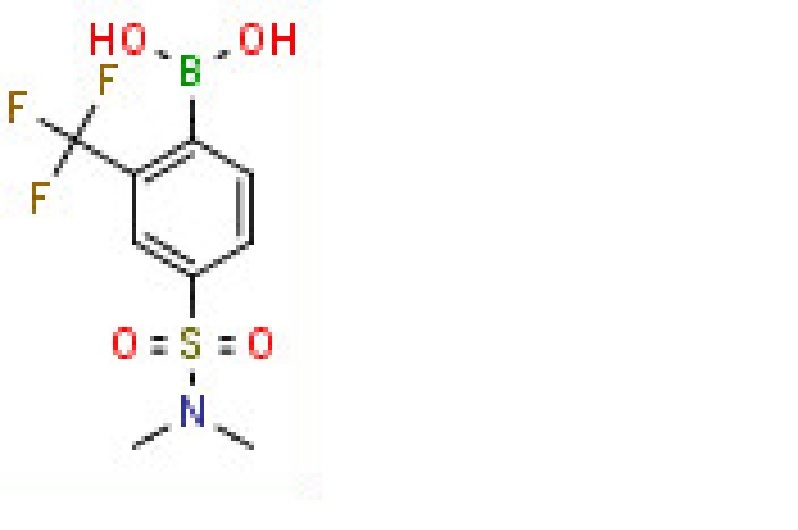
Chemical Name: 4-(N,N-Dimethylsulfamoyl)-2-trifluoromethylphenylboronicacid
CAS No : 1279107-82-2
Purity : 96%
MolecularFormula : C9H11BF3NO4S
Molecular Weight:297.1
Appearance : SolidVersatile Intermediate for Pharmaceutical SynthesisOwing to its dual functional groups, 4-(N,N-Dimethylsulfamoyl)-2-trifluoromethylphenylboronic acid serves as an ideal building block in the synthesis of complex pharmaceutical compounds. Its high purity and chemical stability make it a trusted reagent in exploratory drug development, especially for cross-coupling and other advanced organic reactions.
Safe Handling and StorageThough not classified as hazardous or poisonous according to major regulations, standard laboratory precautions are recommended when handling this compound. The product remains stable for at least 24 months when kept tightly sealed in a cool, dry place, away from moisture and light, safeguarding both user safety and material quality.
FAQ's of 4-(N,N-Dimethylsulfamoyl)-2-trifluoromethylphenylboronic acid:
Q: How should 4-(N,N-Dimethylsulfamoyl)-2-trifluoromethylphenylboronic acid be stored to maintain its quality?
A: This compound should be stored in a cool, dry environment, away from direct light and moisture. Keep the container tightly sealed to preserve its purity and stability, ensuring a minimum shelf life of 24 months under recommended conditions.
Q: What are the primary applications of 4-(N,N-Dimethylsulfamoyl)-2-trifluoromethylphenylboronic acid?
A: It is primarily used as a pharmaceutical intermediate and in organic synthesis, especially in Suzuki-Miyaura cross-coupling reactions. Its structure enables the formation of complex molecular frameworks, making it valuable for research and industrial applications.
Q: Where can this compound be used within pharmaceutical and chemical industries?
A: It is highly suitable for pharmaceutical research, drug development, and advanced organic synthesis laboratories. Its non-hazardous status and high compatibility with cross-coupling procedures facilitate its use in diverse scientific environments.
Q: What is the typical process for utilizing this compound in Suzuki coupling reactions?
A: In a Suzuki-Miyaura reaction, this boronic acid derivative reacts with halogenated aromatic or heteroaromatic compounds in the presence of a palladium catalyst and base, leading to the formation of biaryl or aryl-substituted products crucial to pharmaceutical synthesis.
Q: What are the benefits of choosing this specific boronic acid for synthesis?
A: The presence of trifluoromethyl and N,N-dimethylsulfamoyl substituents enhances its reactivity and compatibility with various synthetic strategies. Its high purity (98%) and non-hazardous nature support efficient, safe, and reproducible synthesis outcomes.
Q: How should this substance be handled despite its non-hazardous classification?
A: While not considered hazardous or poisonous by global regulations, users should still apply standard laboratory safety protocols, such as wearing gloves and protective eyewear, to prevent any unintended contact or contamination.






![2,3-Dihydro-benzo[1,4]dioxine-6-sulfonic acid amide](https://cpimg.tistatic.com/11241797/b/4/2-3-Dihydro-benzo-1-4-dioxine-6-sulfonic-acid-amide.jpg?tr=w300)
 Send Inquiry
 Send Inquiry
 Send SMS


