Product Description
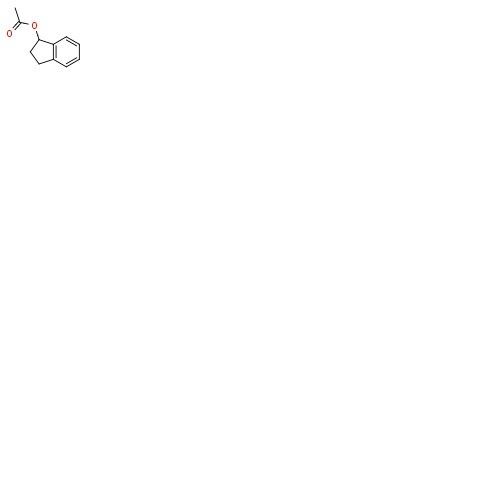
Chemical Name: 1-Acetoxyindan
Synonyms :2,3-Dihydro-1H-inden-1-ylacetate
|1-Acetoxyindane|rac-indanyl acetate |1H-Inden-1-ol, 2,3-dihydro-, 1-acetate
Cas No : 26452-98-2
Purity : 98%
MolecularFormula : C11H12O2
Molecular Weight : 176.2Versatile Intermediate for Synthesis and Fragrances2,3-Dihydro-1H-inden-1-yl acetate is widely used as a key intermediate in organic synthesis and in the fragrance industry. Owing to its stable molecular structure and high purity, it is suitable for laboratory research, industrial manufacturing, and R&D development. Its mild scent and compatibility with various solvents enhance its utility in diverse applications.
Safe and Convenient HandlingThis compound is considered low hazard under standard handling conditions and is non-poisonous. It is important, however, to avoid contact with strong acids, bases, and oxidizing agents, and to protect it from moisture to prevent hydrolysis. Packaged securely in sealed glass bottles or HDPE drums, it is easy to store and handle safely.
FAQ's of 2,3-Dihydro-1H-inden-1-yl acetate:
Q: How should 2,3-Dihydro-1H-inden-1-yl acetate be stored for optimal stability?
A: Store the compound in a cool, dry environment, with the container tightly sealed and protected from moisture and incompatible substances such as strong acids and oxidizers to maintain stability.
Q: What are the main applications of this compound?
A: It is primarily used as an intermediate in organic synthesis, laboratory research, industrial synthesis, and the fragrance industry due to its mild ester-like aroma and chemical stability.
Q: When should this chemical be handled with special precautions?
A: Extra precautions should be taken when there is risk of exposure to strong acids, bases, or oxidizing agents, or if the product is being handled in large volumes, despite being generally considered low hazard.
Q: Where is this compound commonly used?
A: This product is commonly utilized in chemical laboratories, R&D facilities, industrial manufacturing plants, and fragrance production units.
Q: What is the process for using 2,3-Dihydro-1H-inden-1-yl acetate in synthesis?
A: The compound serves as a building block or intermediate, incorporated into synthetic routes as needed; specific procedures depend on the target molecule or end-use application.
Q: What are the benefits of choosing this compound with >98% purity?
A: High purity ensures reproducibility and accuracy in research and industrial processes, resulting in better yields and consistent product quality.






 Send Inquiry
 Send Inquiry
 Send SMS


