Product Description
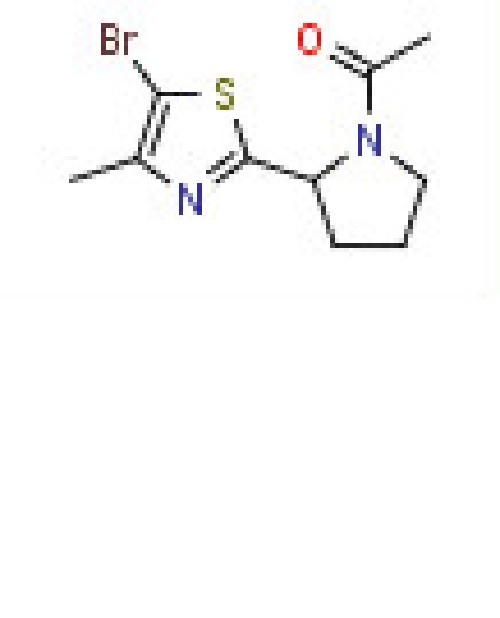
Chemical name: 2-(1-Acetylpyrrolidin-2-yl)-5-bromo-4-methyl-1,3-thiazole
Synonyms: 1-(2-(5-Bromo-4-methylthiazol-2-yl)pyrrolidin-1-yl)ethanone
Cas no: 1361112-87-9
Purity: 95%
Molecular formula: C10H13BrN2OS
Molecular Weight: 289.2
Key Features and Physical PropertiesThis compound, with molecular formula C10H13BrN2OS and a molecular weight of 289.19 g/mol, appears as an off-white to light yellow powder. It displays a melting point of approximately 120-124C and a density of 1.5 g/cm3. Soluble in DMSO and DMF, but sparingly soluble in water, it possesses a stable aromatic heterocyclic structure designed for advanced research applications.
Safe Handling and Storage GuidelinesTo ensure safety, always wear appropriate protective clothing, gloves, and eye/face protection when working with this compound. Store the product in a cool, dry location with the container tightly sealed. Avoid direct contact and inhalation, and prevent interactions with strong oxidizing agents to maintain the substance's stability and integrity.
Applications and Benefits in Research2-(1-Acetylpyrrolidin-2-yl)-5-bromo-4-methyl-1,3-thiazole finds its role as a pharmaceutical or specialty intermediate and is valuable in the synthesis of heterocyclic compounds. Its primary benefit lies in facilitating innovative research and chemical development. The compound is not intended for use in humans or animals and is best utilized in controlled laboratory environments.
FAQ's of 2- (1-Acetylpyrrolidin-2-yl)-5-bromo-4-methyl-1,3- thiazole:
Q: How should 2-(1-Acetylpyrrolidin-2-yl)-5-bromo-4-methyl-1,3-thiazole be stored for optimal stability?
A: Store the compound in a tightly closed container at a cool, dry place. Following these guidelines helps maintain its stability and extends shelf life to approximately 24 months.
Q: What personal protective equipment is recommended when handling this compound?
A: When handling this substance, it is advised to wear suitable protective clothing, gloves, and eye or face protection to minimize risk of irritation to skin, eyes, and the respiratory tract.
Q: Where is this compound commonly supplied from and in what packaging?
A: 2-(1-Acetylpyrrolidin-2-yl)-5-bromo-4-methyl-1,3-thiazole is typically supplied by specialized chemical suppliers or traders in India and is provided in sealed glass bottles or HDPE containers to ensure integrity during transport and storage.
Q: What is the main usage of this compound in research and industry?
A: The compound serves as a pharmaceutical intermediate and is frequently employed in the synthesis of heterocyclic compounds for research and development applications. It is not approved for clinical, human, or veterinary use.
Q: How is compatibility managed to prevent unwanted reactions?
A: Avoid exposing this substance to strong oxidizing agents, as it may react with them. Ensure the storage area is free from such chemicals to maintain compound integrity.
Q: What are the benefits of using this compound for research purposes?
A: It provides reliable, high-purity material for the synthesis of new chemical entities, supporting innovation in pharmaceutical research and advanced synthetic methodologies.
Q: Is this compound classified as hazardous for shipping or regulatory purposes?
A: According to available data, it is considered non-hazardous for transport. However, users should verify local regulations to ensure compliance. It is not assigned a UN or EC number and is designated for custom synthesis only.






![2-Amino- 6-chlorobenzo[d]thiazole](https://cpimg.tistatic.com/11866128/b/4/2-Amino-6-chlorobenzo-d-thiazole.jpg?tr=w300)
 Send Inquiry
 Send Inquiry
 Send SMS
 Call Me Free


