Product Description
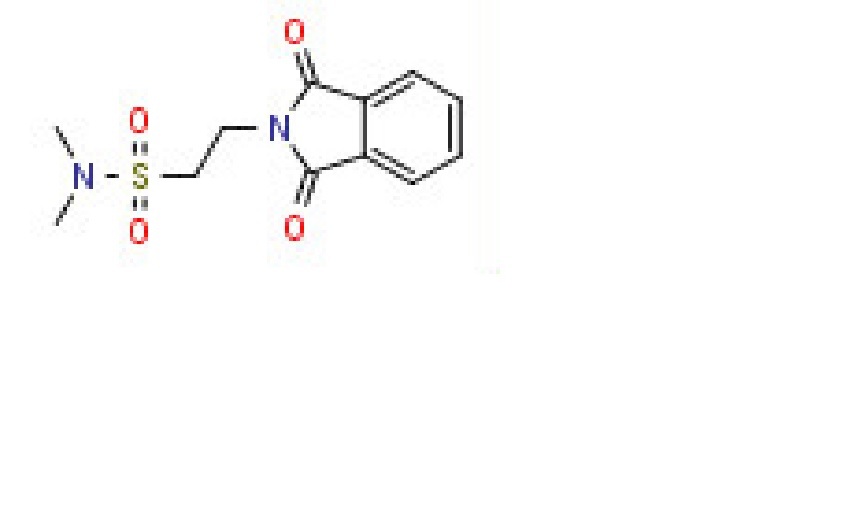
Chemical Name: 2-(1,3-Dioxoisoindol-2-yl)-N,N-dimethylethanesulfonamide
CAS No : 81428-07-1
Purity : 98%
MolecularFormula : C12H14N2O4S
Molecular Weight:282.3
Appearance : SolidPremium Analytical-Grade Compound for ResearchThis compound is specially manufactured for use in organic synthesis and medicinal chemistry. Its high purity and stable characteristics make it suitable for a range of research and pharmaceutical applications. Researchers value its reliability and consistent performance in experimental settings.
Safe Storage and LongevityTo maintain stability and prevent degradation, store 2-(1,3-Dioxoisoindol-2-yl)-N,N-dimethylethanesulfonamide at 2-8C in a dry, tightly sealed container, protected from light and moisture. When properly stored, it retains its analytical characteristics for up to 2 years, ensuring value for extended research timelines.
Ease of Handling and Versatile SolubilityAs a low-toxicity, odorless crystalline powder, this compound is easy to handle under standard laboratory safety protocols. Slight water solubility alongside good solubility in DMSO and DMF enhances its practicality for a variety of organic syntheses and laboratory processes.
FAQ's of 2-(1,3-Dioxoisoindol-2-yl)-N,N- dimethylethanesulfonamide:
Q: How should 2-(1,3-Dioxoisoindol-2-yl)-N,N-dimethylethanesulfonamide be stored for optimal stability?
A: This compound should be kept in a cool, dry environment at a temperature of 2-8C, in a tightly sealed container away from light and moisture. Following these guidelines preserves its stability and extends shelf life up to two years.
Q: What are the main uses of this compound in research and industry?
A: 2-(1,3-Dioxoisoindol-2-yl)-N,N-dimethylethanesulfonamide serves as an intermediate in pharmaceutical and organic synthesis, particularly in medicinal chemistry and chemical research. Its properties make it a valuable building block for synthesizing complex molecules.
Q: When does this product decompose or lose efficacy?
A: The compound decomposes before boiling, so exposure to high temperatures should be avoided. It maintains stability under recommended storage conditions but may degrade if exposed to moisture, light, or excessive heat.
Q: Where is this chemical typically supplied from, and how is it packaged?
A: It is distributed by specialized chemical suppliers and traders, with typical packaging options in sealed bottles or drums, available in 1g, 5g, or 25g quantities, ensuring protection during storage and transport.
Q: What is the process for handling this compound safely in the laboratory?
A: Standard laboratory safety measures are sufficient-use gloves, avoid inhalation or contact with skin and eyes, and work in a well-ventilated area. Its non-toxic nature under normal handling adds convenience and safety in research environments.
Q: What are the solubility characteristics of this substance, and how does this benefit research applications?
A: It is slightly soluble in water, but dissolves readily in organic solvents like DMSO and DMF. This versatility supports its use in a wide array of organic and pharmaceutical research procedures.
Q: How does the benefit of high purity and analytical grade impact research outcomes?
A: Having a compound with >98% purity ensures specificity and accuracy in experimental results, minimizing variables from impurities. This reliability is essential for reproducibility in pharmaceutical and chemical synthesis research.






![5-[(4-Ethoxy-phenyl)-methyl-sulfamoyl]-2-methyl-benzoic acid](https://cpimg.tistatic.com/11881084/b/4/5-4-Ethoxy-phenyl-methyl-sulfamoyl-2-methyl-benzoic-acid.jpg?tr=w300)
 Send Inquiry
 Send Inquiry
 Send SMS
 Call Me Free


