Product Description
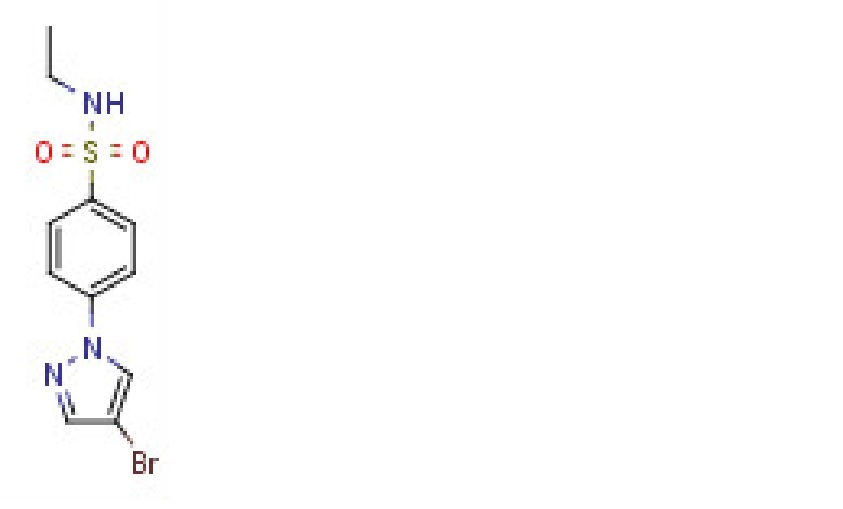
Chemical Name: N-Ethyl4-(4-bromopyrazol-1-yl)benzenesulfonamide
Synonyms :4-(4-Bromo-1H-pyrazol-1-yl)-N-ethylbenzenesulfonamide
CAS No : 1187385-77-8
Purity : 98%
MolecularFormula : C11H12BrN3O2S
Molecular Weight:330.2
Appearance : SolidVersatile Intermediate for Drug DiscoveryN-Ethyl 4-(4-bromopyrazol-1-yl)benzenesulfonamide is a valuable intermediate in pharmaceutical synthesis. Its high purity and stability make it a preferred choice for research and development in medicinal chemistry, facilitating the production of a variety of fine chemicals and pharmaceutical candidates.
Safe and Convenient PackagingThis compound is supplied in HDPE bottles or sealed aluminum foil bags, ensuring protection from moisture and light during transportation and storage. Such packaging maintains the powder's non-hygroscopic nature and extends its shelf life up to two years if stored between 15-30C.
Reliable Stability and HandlingStable under normal lab conditions, this powder is odorless and non-poisonous when used as a reagent. Proper storage in tightly closed containers, away from strong oxidizing agents and sunlight, preserves its quality and minimizes risk of irritation upon contact.
FAQ's of N-Ethyl 4-(4-bromopyrazol-1-yl)benzenesulfonamide:
Q: How should N-Ethyl 4-(4-bromopyrazol-1-yl)benzenesulfonamide be stored for optimal stability?
A: Store the compound in tightly closed HDPE bottles or sealed aluminum foil bags at room temperature (15-30C), away from direct sunlight and strong oxidizing agents, to preserve its stability and purity for up to two years.
Q: What is the primary use of N-Ethyl 4-(4-bromopyrazol-1-yl)benzenesulfonamide in the laboratory?
A: This chemical serves primarily as an intermediate in pharmaceutical research and development, and is commonly used in the synthesis of fine chemicals and drug candidates during laboratory R&D.
Q: When does the compound decompose, and does it have a boiling point?
A: N-Ethyl 4-(4-bromopyrazol-1-yl)benzenesulfonamide decomposes before reaching its boiling point and does not have a standard boiling point value. Its melting point ranges from 190-195C.
Q: Where can information about its structural formula be found?
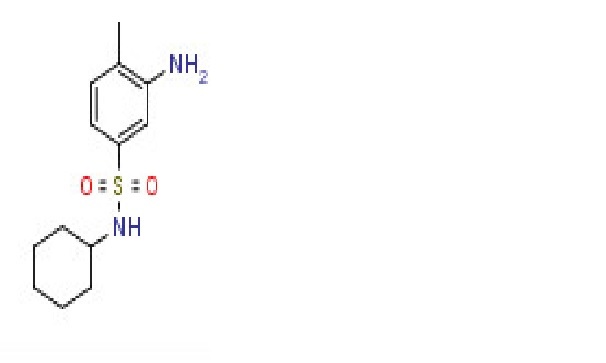
A: The structural formula can be referenced from the attached product image or by consulting reputable chemical databases using its CAS number: 1187385-77-8.
Q: What precautions should be taken while handling this compound?
A: Although not poisonous, it should be handled as a chemical reagent. Avoid direct contact, as it may cause mild irritation to the eyes or skin. Always use appropriate personal protective equipment in the laboratory.
Q: Which solvents are recommended for dissolving this intermediate?
A: The powder is soluble in DMSO and DMF, and has partial solubility in methanol, making these suitable solvents for laboratory preparations and chemical reactions.






 Send Inquiry
 Send Inquiry
 Send SMS


