Product Description
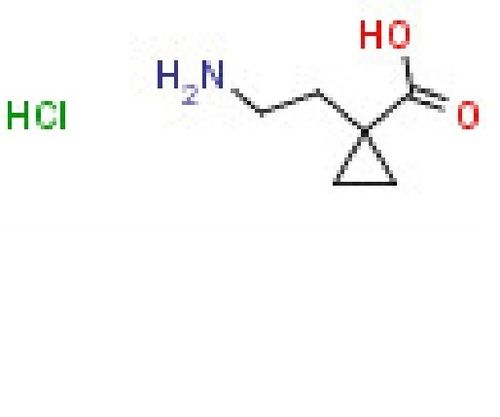
Chemical Name: 1-(2-Aminoethyl)cyclopropane-1-carboxylicacid hydrochloride
Synonyms :1-(2-aminoethyl)cyclopropane-1-carboxylic acid hydrochloride
| 1-(2-Aminoethyl)cyclopropane-1-carboxylic acid HCl
| 1-(2-Aminoethyl)cyclopropanecarboxylic acid hydrochloride
| 1-(2-aminoethyl)cyclopropane-1-carboxylicacid;hydrochloride
Cas No : 1421602-17-6
Purity : 97%
MolecularFormula : C6H11NO2.ClH
Molecular Weight: 165.6
Appearance:Solid High Purity Laboratory CompoundThis compound is supplied in analytical/laboratory grade, suitable for demanding scientific and research applications. Its purity exceeds 98% (HPLC), ensuring reliable results while minimizing contaminants. Each batch is tested for heavy metals (<10 ppm) and moisture content (1.0% loss on drying), meeting strict quality parameters required in chemical synthesis and plant biochemistry.
Versatile Research ApplicationsACC HCl acts as a vital intermediate in plant growth regulator synthesis and biochemical research. The powder's stability and solubility make it ideal for experimental protocols in plant physiology, molecular biology, and chemical synthesis. Its characteristic crystalline form and odorless nature add convenience and safety for laboratory handling.
Safe Storage and UseThis product is non-hazardous in normal conditions and exhibits long-term stability (24 months shelf life) when sealed in a cool, dry container. Customized packaging is available on request, supporting diverse laboratory and industrial requirements. Compliance with HS Code: 29349900 and EINECS No: 244-753-4 ensures global trading and research compatibility.
FAQ's of 1-(2-Aminoethyl)cyclopropane-1-carboxylic acid hydrochloride:
Q: How should 1-(2-Aminoethyl)cyclopropane-1-carboxylic acid hydrochloride be stored for optimal stability?
A: It should be stored in a cool, dry place inside a tightly closed container to maintain its stability and ensure a shelf life of up to 24 months.
Q: What are the typical research and industrial uses of ACC HCl?
A: ACC HCl is used mainly in plant biochemistry as an intermediate for growth regulator studies, as well as in chemical synthesis research and laboratory analysis.
Q: When does the product decompose and is boiling applicable during handling?
A: The compound decomposes before reaching its melting point of 192-196C and does not have a boiling point, thus boiling is not applicable for this product.
Q: Where can customized packaging be requested for this compound?
A: Customized packaging can be arranged with suppliers or distributors in India, accommodating specific research or industrial requirements upon request.
Q: What benefits does using ACC HCl in research offer?
A: With high purity, low heavy metal content, and reliable stability, ACC HCl provides consistent results in experimental and synthesis procedures, supporting accurate and reproducible outcomes.
Q: How is ACC HCl usually supplied and what is its physical appearance?
A: The compound is supplied as a white to almost white crystalline powder, odorless and freely soluble in water, ensuring convenience and safety in laboratory settings.
Q: Is ACC HCl considered hazardous or poisonous under normal conditions?
A: No, ACC HCl is non-hazardous and not poisonous when used as directed under normal laboratory or industrial conditions.






![3-Amino-6-chloro-thieno[3,2-b]pyridine-2-carboxylic acid methyl ester](https://cpimg.tistatic.com/09808920/b/4/3-Amino-6-chloro-thieno-3-2-b-pyridine-2-carboxylic-acid-methyl-ester.jpg?tr=w300)
 Send Inquiry
 Send Inquiry
 Send SMS


