Product Description
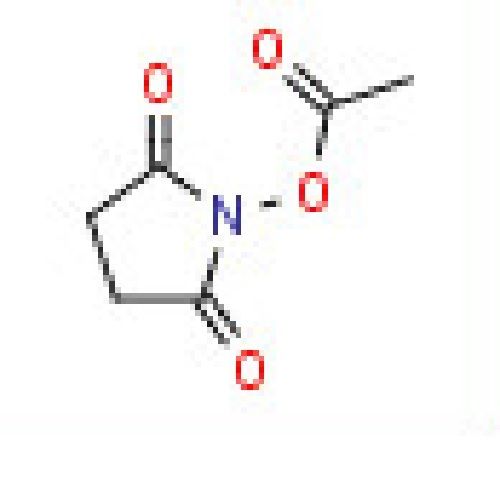
Chemical Name: N-Acetoxysuccinimide
Synonyms :N-Acetoxysuccinimide
| Succinimidyl acetate
| 2,5-Dioxopyrrolidin-1-yl acetate
| 2,5-Pyrrolidinedione, 1-(acetyloxy)-
Cas No : 14464-29-0
Purity : 98%
MolecularFormula : C6H7NO4
Molecular Weight:157.1
Appearance:Solid Stable and Reliable Chemical ReagentSuccinimidyl acetate is respected for its stability, provided it is stored under recommended cool and dry conditions between 2C and 8C. The sealed packaging protects against humidity and light, preserving the powder's 98% purity and effectiveness for up to two years. Its stability ensures reproducible results in analytical and laboratory-grade applications, particularly in sensitive synthesis scenarios.
Versatile Applications in Research and SynthesisThis acylation reagent finds essential roles in chemical synthesis, peptide coupling, labeling, and bioconjugation procedures. Researchers and pharmaceutical professionals value its moderate reactivity, which enables controlled and targeted modification of biomolecules. With compatibility in organic solvents, succinimidyl acetate supports diverse protocols and is a trusted building block for advanced research solutions.
FAQ's of Succinimidyl acetate:
Q: How should succinimidyl acetate be handled to ensure safety?
A: To ensure safety while handling succinimidyl acetate, use personal protective equipment such as gloves, goggles, and a lab coat. Avoid direct contact, work in a well-ventilated area, and always keep the container tightly sealed to reduce exposure to moisture.
Q: What is the recommended method for storing succinimidyl acetate, and why is it important?
A: Succinimidyl acetate should be stored in a cool, dry place between 2C and 8C, protected from light and moisture. Proper storage is crucial to maintain its stability and prevent degradation due to its high sensitivity to moisture.
Q: Where is succinimidyl acetate commonly used?
A: Succinimidyl acetate is commonly used in laboratories focused on chemical synthesis, peptide coupling, labeling, and bioconjugation. Its application extends to pharmaceutical research and advanced chemical modification studies.
Q: What benefits does succinimidyl acetate offer in peptide synthesis or labeling applications?
A: This reagent facilitates efficient acylation, enabling precise attachment of functional groups during peptide coupling or bioconjugation. Its moderate reactivity allows for controlled modification processes, enhancing selectivity and yield in complex syntheses.
Q: When should a new batch of succinimidyl acetate be opened?
A: It is best to open a new batch of succinimidyl acetate only when ready for immediate use. Exposure to air and moisture can compromise its quality; unopened containers retain maximum reactivity and purity for up to 24 months from the date of manufacture.
Q: How is succinimidyl acetate typically used in laboratory protocols?
A: Researchers dissolve succinimidyl acetate in organic solvents like DMF or DMSO, then use it as an acylating agent in various synthetic and labeling reactions. The powder's solubility profile makes it suitable for a range of laboratory and pharmaceutical processes.






 Send Inquiry
 Send Inquiry
 Send SMS


