Product Description
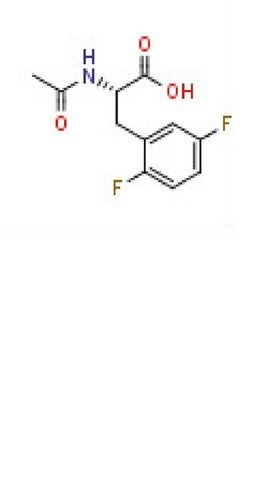
Chemical Name: N-Acetyl-3-(2,5-difluorophenyl)-l-alanine
Synonyms : N-acetyl-3-(2,5-difluorophenyl)-L-alanine
(S)-2-acetamido-3-(2,5-difluorophenyl)propanoicacid
L-Phenylalanine,N-acetyl-2,5-difluoro-
(2S)-2-acetamido-3-(2,5-difluorophenyl)propanoicacid
CAS No : 1017294-09-5
Purity : 95%
MolecularFormula : C11H11F2NO3
Molecular Weight: 243.2
High-Quality Analytical/Pharmaceutical GradeThis compound meets stringent quality standards, featuring over 98% purity and a heavy metal content of less than 10 ppm. Its stable crystalline form and analytical or pharmaceutical-grade designation make it ideal for precise research and intermediate applications.
Versatile Applications in ResearchN-Acetyl-3-(2,5-difluorophenyl)-L-alanine is widely used as an intermediate in pharmaceutical synthesis, peptide chemistry, and drug discovery research. Its two fluorine substitutions confer valuable properties for exploration in medicinal chemistry.
Stable and Reliable StoragePackaged in aluminum foil bags or HDPE bottles, this compound retains its stability for up to 24 months when stored between 2-8C and protected from light and moisture. The odorless or faintly aromatic powder format ensures ease of handling in research or industrial settings.
FAQ's of N-Acetyl-3-(2,5-difluorophenyl) -l-alanine:
Q: How should N-Acetyl-3-(2,5-difluorophenyl)-L-alanine be stored to maintain optimal stability?
A: For best results, store the compound at 2-8C in a sealed aluminum foil bag or HDPE bottle, protected from light and moisture. Following these recommendations preserves stability and ensures up to 24 months of shelf life.
Q: What are the primary uses and benefits of this compound in research?
A: N-Acetyl-3-(2,5-difluorophenyl)-L-alanine is primarily used as a pharmaceutical intermediate for peptide synthesis and drug discovery. Its high purity and unique difluorophenyl substitution make it valuable for developing new therapeutic agents and conducting advanced peptide chemistry.
Q: When does the compound decompose, and why is boiling point not applicable?
A: This compound decomposes before reaching its boiling point, which is why a boiling point is not provided. It is designed for use at lower temperatures in research and should not be subjected to high heat.
Q: Where can this compound be sourced, and in what packaging is it supplied?
A: It is available through suppliers and traders in India and delivered in secure, sealed aluminum foil bags or HDPE bottles, ensuring product integrity during storage and shipment.
Q: What is the recommended process for using this compound in peptide synthesis?
A: Dissolve the compound in a suitable solvent such as DMSO or methanol, given its limited water solubility. It can then be incorporated into peptide synthesis reactions as an intermediate, following standard protocols.
Q: How does the optically active L-isomer property benefit research applications?
A: The optically active L-form ensures that the compound mimics natural amino acids' stereochemistry, which is crucial for accuracy in peptide synthesis and for achieving desired biological activities in drug discovery.
Q: What makes this compound safe for laboratory use in terms of toxicity and contaminants?
A: It is non-poisonous and contains less than 10 ppm of heavy metals, adhering to high safety and purity standards, which promotes safe handling in laboratory and pharmaceutical research settings.






![(3As,4r,6ar) -6-((benzyloxy)methyl)-5-fluoro-2,2-dimethyl-4,6a-dihydro-3ah-cyclopenta[d][1,3]dioxol-4-ol](https://cpimg.tistatic.com/10042135/b/4/-3As-4r-6ar-6-benzyloxy-methyl-5-fluoro-2-2-dimethyl-4-6a-dihydro-3ah-cyclopenta-d-1-3-dioxol-4-ol.jpg?tr=w300)
![4-Amino-1-[(2R,4R,5R)-3,3-difluoro-4-hydroxy-5-(hydroxymethyl)oxolan-2-yl]-1,2-dihydropyrimidin-2-one 98%](https://cpimg.tistatic.com/09815400/b/4/4-Amino-1-2R-4R-5R-3-3-difluoro-4-hydroxy-5-hydroxymethyl-oxolan-2-yl-1-2-dihydropyrimidin-2-one-98-.jpg?tr=w300)
 Send Inquiry
 Send Inquiry
 Send SMS


