Product Description
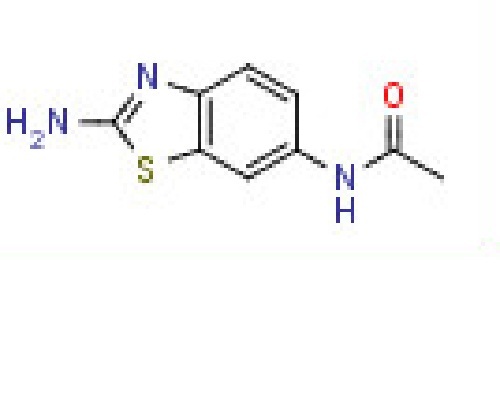
Chemicalname: N-(2-Amino-benzothiazol-6-yl)-acetamide
Synonyms:N-(2-amino-6-benzothiazolyl)-
Cas no:22307-4-4
Purity:95%
Molecular formula:C9H9N3OS
Molecular Weight:207.3
Exceptional Intermediate for Research and IndustryN-(2-Amino-benzothiazol-6-yl)-acetamide is widely utilized as an intermediate in the synthesis of pharmaceuticals and agrochemicals. Its high purity and stability make it suitable for both industrial and research applications. Solubility in various solvents expands its utility for diverse chemical processes.
Safety and HandlingThis compound is not classified as hazardous under GHS and is not regulated for transport, making it convenient to handle and ship. However, personal protective equipment is recommended. It should be stored tightly sealed, in a cool, dry location, and protected from light for optimal shelf life.
FAQs of N- (2-Amino-benzothiazol-6-yl)-acetamide:
Q: How should N-(2-Amino-benzothiazol-6-yl)-acetamide be stored for maximum stability?
A: To maintain its stability and extend shelf life to 24 months, the compound should be kept tightly sealed, stored in a cool, dry place, and protected from light exposure.
Q: What benefits does this compound offer as a pharmaceutical intermediate?
A: Its high purity and stability under normal conditions make it highly effective as an intermediate in synthesizing pharmaceuticals and agrochemicals, supporting reliable and efficient chemical reactions.
Q: When does the physical integrity of this compound need special attention?
A: Care should be taken to avoid exposure to light and moisture, as the compound is light sensitive and must be stored properly to preserve its crystalline form.
Q: Where can this product be utilized in research or industry?
A: It is commonly used in research laboratories and industrial settings as an intermediate for chemical synthesis, especially in the pharmaceutical and agrochemical sectors.
Q: What are the recommended safety measures when handling this chemical?
A: Although not hazardous under GHS, it is advisable to use personal protective equipment and prevent direct contact with skin and eyes during handling.
Q: How is the compound typically packaged for distribution?
A: Standard packs include 25g and 100g containers, but other sizes are available upon request to suit varied laboratory and industrial needs.






![2-Amino- 6-chlorobenzo[d]thiazole](https://cpimg.tistatic.com/11866128/b/4/2-Amino-6-chlorobenzo-d-thiazole.jpg?tr=w300)
 Send Inquiry
 Send Inquiry
 Send SMS


