Product Description
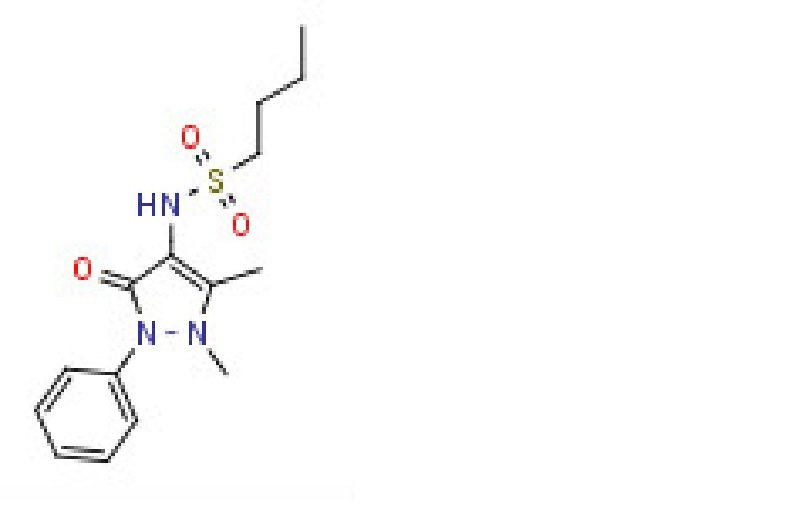
N-(1,5-Dimethyl-3-oxo-2-phenyl-2,3-dihydro-4-pyrazolyl)butane-1-sulfonamide
CAS No : 895767-41-6
Purity : 95%
MolecularFormula :C15H21N3O3S
Molecular Weight:323.4
Reliable Intermediate for Research and SynthesisThis compound is favored in laboratories as a dependable chemical intermediate. Its high purity (>98%) ensures consistency for chemical synthesis and academic research. Provided in a stable, crystalline form and packaged to maintain integrity, it allows users to carry out complex protocols confidently. Researchers benefit from a two-year shelf life and straightforward compatibility with common organic solvents.
Safe Handling and Storage ProtocolsN-(1,5-Dimethyl-3-oxo-2-phenyl-2,3-dihydro-4-pyrazolyl)butane-1-sulfonamide is simple to store and handle when following standard laboratory safety practices. Use personal protective equipment and avoid inhalation or direct contact with skin and eyes. Ensure the compound is stored under 25C in a dry, ventilated, and dark place. These precautions help maintain stability and maximize product shelf life.
Environmental and Regulatory ComplianceThis research chemical is not classified as environmentally hazardous and is non-poisonous within its intended research applications. It is not regulated as hazardous (UN number: not regulated), and is not suitable for pharmaceutical, household, or food uses. Intended solely for laboratory research and chemical synthesis, compliance with all relevant safety and regulatory requirements is straightforward.
FAQ's of N-(1,5-Dimethyl-3-oxo-2-phenyl-2,3-dihydro-4-pyrazolyl)butane-1- sulfonamide:
Q: How should N-(1,5-Dimethyl-3-oxo-2-phenyl-2,3-dihydro-4-pyrazolyl)butane-1-sulfonamide be stored to maintain its quality?
A: The compound should be stored below 25C in a cool, dry, and well-ventilated area, protected from light and moisture. Proper storage ensures maximum stability and preserves its two-year shelf life.
Q: What is the recommended handling process for this chemical in a laboratory setting?
A: Always wear appropriate personal protective equipment, such as gloves and safety goggles. Avoid inhaling dust or allowing the chemical to contact your skin and eyes. Use the compound in a well-ventilated area and wash hands thoroughly after use.
Q: Where can this product be used, and what are its main applications?
A: This compound is intended for laboratory research and chemical synthesis as an intermediate. It is not suitable for pharmaceutical, food, or household use, and should only be handled by qualified personnel in controlled environments.
Q: What are the key physical properties and benefits of using this compound?
A: It appears as an off-white to pale yellow crystalline powder with high purity (>98%) and is odorless. Its stable nature under recommended conditions and compatibility with various organic solvents make it highly suitable for complex research and synthetic work.
Q: What should I do if the compound comes into contact with moisture or is exposed to extreme temperatures?
A: Exposure to moisture and extreme temperatures should be avoided as it may compromise the compound's stability. If such exposure occurs, the material may need to be replaced to ensure experimental integrity. Always inspect the product before use if storage conditions may have been compromised.
Q: Is the compound hazardous or regulated under international transport guidelines?
A: This compound is not regulated as hazardous under UN guidelines and does not carry a UN number. It is also not classed as environmentally hazardous, simplifying transport and handling within laboratory settings.
Q: What are the advantages of using this compound in research laboratories?
A: The compound offers high stability, purity, and reliable performance as an intermediate in research and synthesis. Its non-poisonous nature (for research use), compatibility with organic solvents, and convenient packaging make it a practical choice for scientific applications.






 Send Inquiry
 Send Inquiry
 Send SMS
 Call Me Free


