Product Description
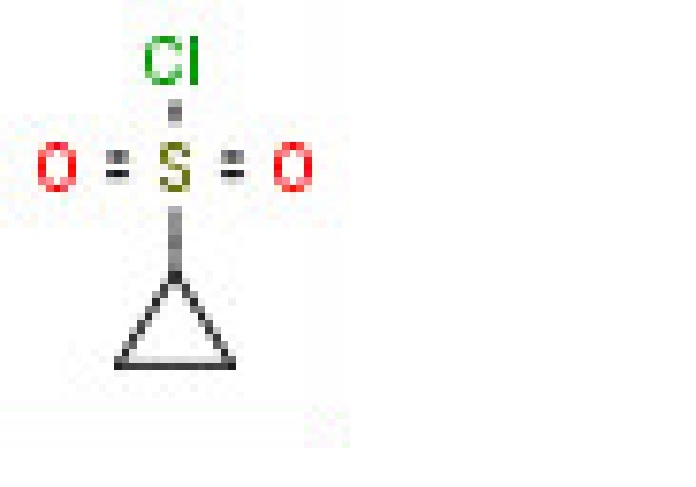
Chemical Name:Cyclopropanesulfonyl chloride
Synonyms : cyclopropane sulfonyl chloride
cyclopropanesulfonicacid chloride
CAS No :139631-62-2
Purity : 97%
MolecularFormula : C3H5ClO2S
Molecular Weight: 140.6
Appearance: Liquid. Moisture sensitiveKey Properties & Handling PrecautionsCyclopropanesulfonyl chloride is characterized by a density of 1.382 g/cm3 and a boiling point of 96-98C at 10 mmHg. This clear, volatile liquid is stable under recommended storage conditions but reacts rapidly with water, releasing corrosive vapors. It is corrosive, causing severe burns and eye damage; thus, it must be handled with protective gear in well-ventilated environments. Due to its dangerous goods classification (UN 3261), proper packaging and regulated transport are required.
Applications in Industry and ResearchThis sulfonyl chloride serves as a critical intermediate in pharmaceutical and agrochemical synthesis. It is primarily used to introduce sulfonyl groups into organic molecules, aiding in the production of sulfonamide derivatives and other specialty chemicals. Its moisture sensitivity and purity make it suitable for controlled chemical processes in research laboratories and industrial settings.
FAQ's of Cyclopropanesulfonyl chloride:
Q: How should Cyclopropanesulfonyl chloride be stored and handled for maximum stability and safety?
A: Cyclopropanesulfonyl chloride must be stored in a tightly sealed HDPE or glass bottle, kept in a cool, dry, and well-ventilated area away from moisture and incompatible substances. To ensure safety, always use appropriate protective equipment, including gloves and eye protection, and handle the product in a designated chemical fume hood. Strictly avoid contact with water as it rapidly hydrolyzes, releasing harmful vapors.
Q: What are the primary uses and benefits of Cyclopropanesulfonyl chloride in chemical synthesis?
A: This compound functions as a versatile sulfonylating agent, enabling the introduction of sulfonyl groups into various organic substrates. Its main benefits include high reactivity and purity, which are essential for synthesizing pharmaceutical intermediates, agrochemicals, and sulfonamide derivatives with precision and efficiency.
Q: When is Cyclopropanesulfonyl chloride typically employed during the synthesis process?
A: Cyclopropanesulfonyl chloride is incorporated during the stage of sulfonylation in organic synthesis, where a reactive sulfonyl group is introduced to a target molecule. This step is crucial for the production of sulfonamide drugs and specialty chemicals, often occurring after initial molecular framework construction and prior to final product isolation.
Q: Where can Cyclopropanesulfonyl chloride be sourced, and what are the typical packaging options?
A: Cyclopropanesulfonyl chloride is available from authorized chemical suppliers and traders in India, usually supplied in sealed HDPE or glass bottles to protect from moisture. The standard packaging is designed to comply with safety regulations for dangerous goods, ensuring product integrity during storage and transport.
Q: What is the minimum order quantity (MOQ) and recommended shelf life for Cyclopropanesulfonyl chloride?
A: The minimum order quantity is 250 grams. When stored under the recommended conditions-sealed and protected from moisture in a cool, dry area-the typical shelf life ranges from 12 to 24 months.
Q: How is Cyclopropanesulfonyl chloride transported, considering its hazardous nature?
A: Transportation must adhere to dangerous goods regulations (UN 3261). The product should be packed in sealed, moisture-proof HDPE or glass bottles and handled by professionals trained in chemical safety to prevent leaks and accidental exposure during shipment.






 Send Inquiry
 Send Inquiry
 Send SMS


