Product Description
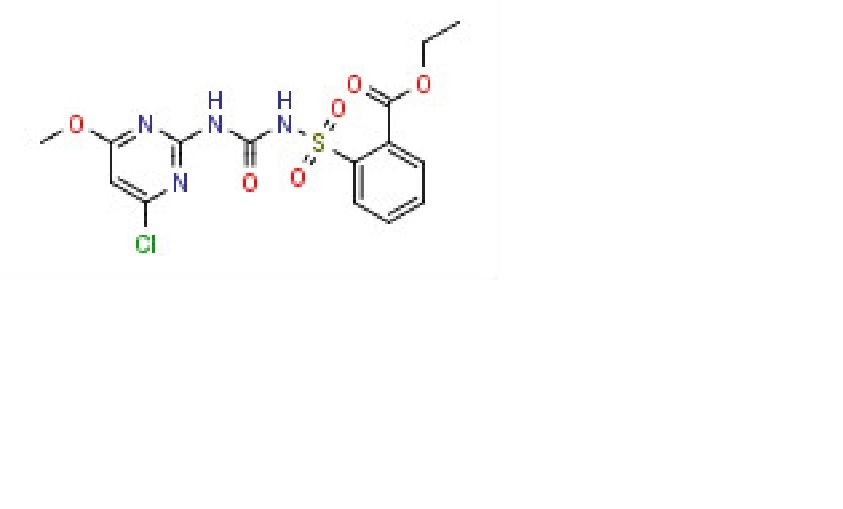
Chemical Name: Chlorimuron-ethyl
Synonyms :Ethyl2-(4-chloro-6-methoxy-2-pyrimidinylcarbamoylsulfamoyl)benzoate
CAS No : 90982-32-4
Purity : 96%
MolecularFormula : C15H15ClN4O6S
Molecular Weight:414.8
Appearance : SolidHighly Effective Broadleaf Weed ControlChlorimuron-ethyl is recognized for its post-emergent action against a wide spectrum of broadleaf weeds, particularly in soybean and peanut fields. Its systemic nature ensures the active ingredient is absorbed and translocated within the plant, resulting in superior efficacy even against stubborn weed populations.
Safe Handling and Stable StorageThis herbicide is stable under normal storage and handling conditions. It should be stored in its original, tightly closed container, away from direct sunlight and moisture, to maintain a shelf life of up to two years from the date of manufacture. Always refer to safety guidelines and label instructions to minimize exposure risks.
Flexible Application and CompatibilityChlorimuron-ethyl can be applied alone or in combination with other herbicides, offering flexibility for integrated weed management. Compatibility with many other products makes it a versatile choice, but always consult the label for any restrictions and recommended tank-mix partners.
FAQ's of Chlorimuron -ethyl:
Q: How does chlorimuron-ethyl control weeds in crops?
A: Chlorimuron-ethyl inhibits the acetolactate synthase (ALS) enzyme in target plants, disrupting protein synthesis necessary for weed growth. This mode of action selectively controls broadleaf weeds post-emergence, protecting valuable crops like soybeans and peanuts.
Q: What is the recommended method for applying chlorimuron-ethyl?
A: Apply chlorimuron-ethyl post-emergence directly to the soil or foliage of targeted weeds as specified on the official label. Always calibrate equipment for even distribution and follow safety guidelines to ensure optimal weed control and minimize risks.
Q: When should chlorimuron-ethyl be used during the crop growth cycle?
A: Chlorimuron-ethyl is best applied post-emergence, once weeds are visible but before they become well-established. Early application improves effectiveness while minimizing competition for nutrients and resources with the crop.
Q: Where should I store chlorimuron-ethyl for maximum stability?
A: Store chlorimuron-ethyl in its original, tightly sealed container in a cool, dry place away from direct sunlight. Avoid storing near water sources to prevent accidental contamination, as the product is harmful to aquatic life.
Q: What are the environmental and safety precautions for using chlorimuron-ethyl?
A: Chlorimuron-ethyl is classified as slightly hazardous and toxic to aquatic life. Use appropriate protective equipment during handling, avoid inhalation or ingestion, and prevent runoff or contamination of water bodies by following label guidelines.
Q: What is the minimum order quantity (MOQ) and available packaging options?
A: The minimum order quantity for chlorimuron-ethyl is 100 kg. It is typically supplied in 25 kg fiber drums, but customized packaging solutions are also available upon request to suit specific customer needs.
Q: What benefits does chlorimuron-ethyl offer to agricultural producers?
A: Chlorimuron-ethyl provides efficient, selective control of problematic broadleaf weeds, leading to improved crop yields and reduced need for manual weeding. Its systemic action and compatibility with other herbicides enhance integrated weed management programs.






![4-[(Cyclopropylamino)sulfonyl]benzoic acid](https://cpimg.tistatic.com/10858682/b/4/4-Cyclopropylamino-sulfonyl-benzoic-acid.jpg?tr=w300)
 Send Inquiry
 Send Inquiry
 Send SMS


