Product Description
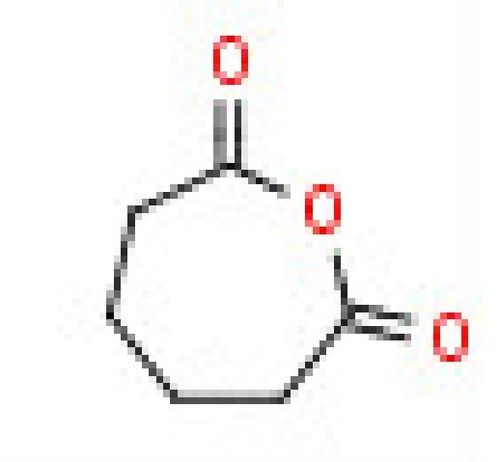
Chemical Name: Adipicanhydride
Synonyms :Oxepane-2,7-dione
| 2,7-Oxepanedione
| Adipic anhydride
| 2,7-oxepanedion
Cas No : 2035-75-8
Purity : 97%
MolecularFormula : C6H8O3
Molecular Weight:128.1
Appearance:SolidMoisture Sensitivity and Storage GuidelinesAdipic anhydride's hygroscopic nature requires it to be stored in a cool, dry, and well-ventilated area, tightly sealed to prevent exposure to moisture. The product decomposes in water, forming adipic acid. Using original, sealed packaging ensures a shelf life of up to 12 months. Always keep away from strong bases, amines, and other incompatible substances to maintain stability.
Versatile Intermediate for Polymer ProductionAs an essential chemical intermediate, adipic anhydride is widely used in organic synthesis, facilitating the manufacture of polyamides, polyesters, and various resins. Its high reactivity enables efficient chemical transformations, making it valuable in both the research and industrial sectors. Its applicability enhances productivity in polymer and resin industries.
Safe Handling and Transportation BenefitsAdipic anhydride is classified as non-hazardous under the GHS and is not regulated as dangerous goods for transport, ensuring easier and safer logistics. While it is non-poisonous, handling should still be done with care to avoid unnecessary contact with moisture. The product's fiber drum packing (usually 25 kg) ensures safe delivery and convenient storage.
FAQ's of Adipic anhydride:
Q: How should adipic anhydride be stored to maintain its quality?
A: To preserve its quality, adipic anhydride should be stored in a cool, dry, well-ventilated place, in its original sealed packaging away from moisture and incompatible substances such as strong bases, amines, and water.
Q: What is the primary usage of adipic anhydride in industrial applications?
A: Adipic anhydride is mainly used as an intermediate in organic synthesis, particularly for the production of polymers and resins, thanks to its high reactivity.
Q: When does adipic anhydride decompose and what are the byproducts?
A: Adipic anhydride decomposes upon exposure to moisture or water, resulting in the formation of adipic acid as a primary decomposition product.
Q: Where is adipic anhydride commonly utilized?
A: It is commonly utilized in chemical manufacturing plants, especially in industries producing polymers, resins, and specialty organic compounds.
Q: What precautions are necessary when handling adipic anhydride?
A: Although not classified as hazardous or poisonous, adipic anhydride should be handled carefully, using personal protective equipment and avoiding contact with water or strong bases to ensure safety and maintain product stability.
Q: How is adipic anhydride transported, and what is the recommended packing method?
A: Adipic anhydride is not regulated as dangerous goods, making transportation straightforward. It is typically packed in 25 kg fiber drums or as required, ensuring the product stays free from moisture and remains safe during transit.
Q: What benefits does adipic anhydride offer in organic synthesis?
A: Its high reactivity and purity make adipic anhydride an efficient intermediate, streamlining the synthesis of polymers and resins and improving the overall productivity of chemical processes.






![2-Azabicyclo[2.1.1]hexane-2,5-dicarboxylic acid 2-tertbutyl ester](https://cpimg.tistatic.com/10038948/b/4/2-Azabicyclo-2-1-1-hexane-2-5-dicarboxylic-acid-2-tertbutyl-ester.jpg?tr=w300)
 Send Inquiry
 Send Inquiry
 Send SMS
 Call Me Free


