Product Description
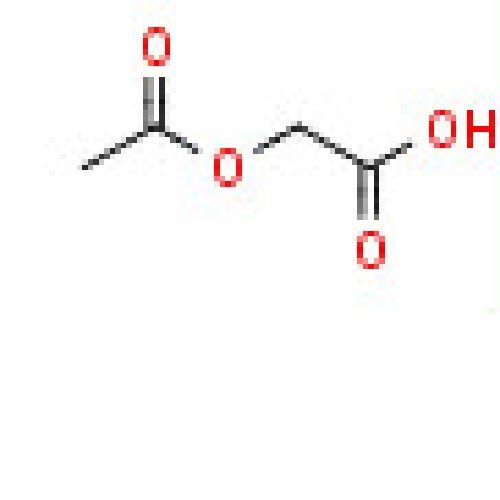
Chemical Name: Acetoxyaceticacid
Synonyms :2-acetoxyaceticacid
|2-acetyloxyaceticacid
|Acetic acid,2-(acetyloxy)-
|Acetic acid,(acetyloxy)-
|(Acetyloxy)aceticacid
|alpha-Acetoxyaceticacid
|Glycolic acid,acetate
Cas No : 13831-30-6
Purity : 96%
MolecularFormula : C4H6O4
Molecular Weight: 118.1
Appearance: solid Versatile Applications in Research and IndustryAcetoxyacetic acid plays a pivotal role in organic synthesis, serving as an intermediate for pharmaceuticals and specialty chemicals. Laboratories and industries value its high purity and reactivity, providing reliable results in research and production. Its unique properties facilitate various chemical processes, making it essential for advanced synthesis and development.
Safe Handling and Storage GuidelinesGiven its corrosive and hazardous characteristics, acetoxyacetic acid requires stringent safety measures. Store it in a cool, well-ventilated area in tightly sealed containers, isolated from bases, oxidizers, and reducing agents. Use appropriate protective equipment such as gloves, goggles, and chemical-resistant clothing to prevent harmful contact. Proper labeling is mandatory during storage and transport.
FAQs of Acetoxyacetic acid:
Q: How should acetoxyacetic acid be handled and stored safely?
A: Acetoxyacetic acid must be handled in a well-ventilated environment using protective gloves, goggles, and proper clothing. It should be stored in tightly closed containers, kept in a cool, dry location away from incompatible substances like bases and oxidizers. Ensure all containers are correctly labeled and that material safety procedures are followed during handling and disposal.
Q: What are the primary industrial and research uses of acetoxyacetic acid?
A: This compound is predominantly used in organic synthesis, chemical research, and as a pharmaceutical intermediate. Its high reactivity and purity make it suitable for developing specialty chemicals and supporting various research applications in laboratory settings.
Q: When is immediate first aid necessary with acetoxyacetic acid exposure, and what is the process?
A: Immediate first aid is necessary if acetoxyacetic acid comes into contact with skin or eyes, or if inhaled or ingested. Quickly rinse the affected area with plenty of water and seek medical assistance promptly. Removal of contaminated clothing and moving to fresh air are recommended as part of first-response procedures.
Q: Where should acetoxyacetic acid be stored to maximize its shelf life?
A: To ensure optimal stability, acetoxyacetic acid should be kept in a cool, dry, well-ventilated space, away from direct sunlight and sources of heat. Containers must remain tightly sealed and isolated from incompatible chemicals. Proper storage conditions increase its shelf life to up to 24 months.
Q: What are the benefits of using acetoxyacetic acid in chemical processes?
A: The key benefits include its reliable high purity (98%), efficient miscibility with numerous solvents, and its role as a valuable intermediate for producing pharmaceuticals and specialty chemicals. Its stability under recommended conditions also adds to its utility in controlled chemical environments.
Q: How is acetoxyacetic acid transported safely according to regulations?
A: Acetoxyacetic acid is classified as a dangerous good (Hazard Class 8, UN 3265) and must be transported in compliant, well-sealed packaging reflecting its corrosive nature. Proper labeling, documentation, and adherence to local and international hazardous material transport standards are essential for safe logistics.






![2-Azabicyclo[3.1.1]heptane-1-carboxylic acid hydrochloride](https://cpimg.tistatic.com/10032318/b/4/2-Azabicyclo-3-1-1-heptane-1-carboxylic-acid-hydrochloride.jpg?tr=w300)
 Send Inquiry
 Send Inquiry
 Send SMS


