Product Description
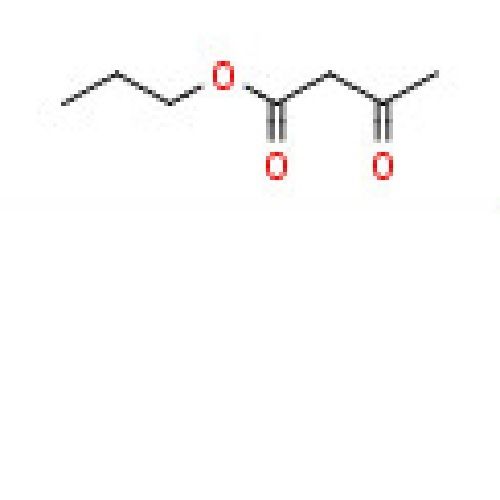
Chemical Name: Acetoaceticacid n-propyl ester
Synonyms :Propyl3-oxobutanoate
|Acetoaceticacid n-propyl ester |BUTANOIC ACID, 3-OXO-, PROPYL ESTER |Acetoacetic acid,propyl ester |n-propyl acetoacetate
|propylacetoacetate
Cas No : 1779-60-8
Purity : 98%
MolecularFormula : C7H12O3
Molecular Weight: 144.2
Appearance:LiquidVersatile Intermediate for Industrial ApplicationsAcetoacetic acid n-propyl ester is widely utilized as a chemical intermediate due to its suitability for synthesizing various pharmaceutical compounds, agrochemicals, dyes, and fragrance formulations. Its high purity and unique properties make it an essential raw material that enhances product quality and process efficiency across several industries.
Safe Handling and Storage GuidelinesThis ester remains stable under normal conditions but should be handled with care to avoid skin and eye irritation. Adequate ventilation is advised during use, and direct contact should be minimized. For maximum shelf life, it should be stored in tightly sealed containers, in cool, well-ventilated spaces, away from ignition sources and moisture.
Physical and Chemical PropertiesFeaturing a boiling point of 196C and a low vapor pressure, this substance is a colorless, slightly fruity-scented liquid that maintains clarity and stability. Its slight water solubility and miscibility with most organic solvents facilitate its use in various organic synthesis applications, offering versatility and process flexibility.
FAQs of Acetoacetic acid n-propyl ester:
Q: How should Acetoacetic acid n-propyl ester be stored for maximum stability?
A: It should be kept in a tightly closed HDPE drum or steel container, in a cool, dry, and well-ventilated area, away from sources of ignition and moisture. Such conditions help retain the products quality for up to 12 months.
Q: What is the primary usage of Acetoacetic acid n-propyl ester in industry?
A: Its main use is as an intermediate in organic synthesis, particularly within the pharmaceutical, agrochemical, dye, and flavors and fragrances industries, where it serves as a precursor for complex molecules.
Q: When is it necessary to take additional handling precautions with this product?
A: Precautions should be taken whenever transferring, mixing, or coming into direct contact with the substance. Use adequate ventilation and wear protective equipment to avoid skin and eye irritation.
Q: Where can Acetoacetic acid n-propyl ester be applied for best results?
A: The ester is best applied during the synthesis of pharmaceutical compounds, agrochemical formulations, dyes, or aromatic chemicals, benefiting processes that require high-purity intermediates.
Q: What is the production process of Acetoacetic acid n-propyl ester?
A: It is produced by esterification, where acetoacetic acid reacts with n-propyl alcohol under catalyzed conditions to yield the ester.
Q: How does using this ester benefit chemical manufacturing?
A: Its high purity, stability, and compatibility with organic solvents allow for efficient reactions, better yields, and consistent quality in the end products.
Q: Is Acetoacetic acid n-propyl ester considered hazardous or poisonous?
A: It is not classified as poisonous; however, it may cause mild skin and eye irritation, so standard chemical handling protocols should always be observed.






 Send Inquiry
 Send Inquiry
 Send SMS


