Product Description
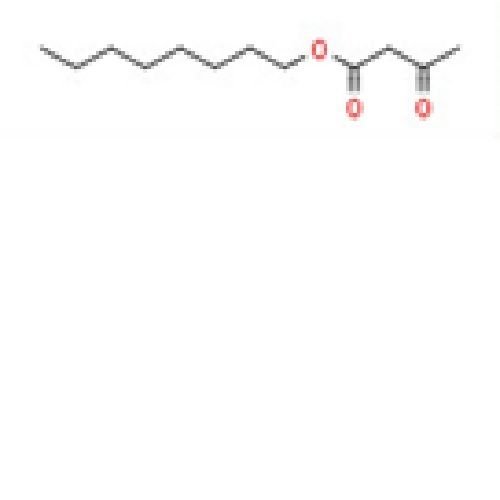
Chemical Name: Acetoaceticacid n-octyl ester
Synonyms :Acetoacetic Acidn-Octyl Ester |Octyl acetoacetate
|n-OctylAcetoacetate |Butanoic acid, 3-oxo-, octyl ester
|ACETOACETICACIDN-OCTYLESTER
Cas No : 16436-00-3
Purity : 95%
MolecularFormula : C12H22O3
Molecular Weight: 214.3
Appearance:LiquidVersatile Intermediate for SynthesisAcetoacetic acid n-octyl ester serves as a vital building block in the chemical industry. Its high purity (98%) and stability make it suitable for pharmaceutical, pigment, and agrochemical intermediate production. Its adaptability for use in diverse organic synthesis processes makes it a preferred choice for suppliers and traders.
Safe Handling and StorageThe ester is combustible and should be stored in a cool, dry place, away from heat and strong oxidizers. It is not poisonous under recommended handling guidelines, and complies with REACH and other chemical safety regulations. Packaging in HDPE carboys or steel drums ensures safety during transportation and storage.
Physical and Chemical CharacteristicsFeaturing a sweet, ester-like aroma and a viscosity of 5.6 mPas at 25C, this colorless liquid is insoluble in water but freely soluble in organic solvents. Its stability and clarity make it an ideal component in many industrial applications requiring consistent chemical performance.
FAQ's of Acetoacetic acid n-octyl ester:
Q: How is acetoacetic acid n-octyl ester manufactured?
A: This compound is synthesized via esterification, where acetoacetic acid reacts with n-octanol under controlled conditions. The process is closely monitored to achieve a purity level of at least 98%.
Q: What are the main uses of acetoacetic acid n-octyl ester?
A: It is primarily used as an intermediate in the formulations of pigments, pharmaceuticals, and agrochemicals. Additionally, it is valued as a dispersant in organic synthesis, particularly within pigment production.
Q: When should acetoacetic acid n-octyl ester be used in synthesis?
A: It is ideal for organic synthesis requiring a stable, non-poisonous ester with good solubility in organic solvents, especially where intermediates for advanced pigment and active pharmaceutical ingredient production are necessary.
Q: Where should this chemical be stored to maintain its stability?
A: It should be stored in tightly sealed HDPE carboys or steel drums, placed in a cool, dry location away from sources of heat, open flames, and strong oxidizers to preserve its stability and prevent combustion hazards.
Q: What precautions are necessary for safe handling?
A: Avoid exposure to heat, sparks, or open flames, and keep the substance away from strong oxidizers. Use appropriate personal protective equipment and ensure adequate ventilation during handling.
Q: What are the benefits of using acetoacetic acid n-octyl ester in industrial processes?
A: Its stability, clarity, high level of purity, and excellent compatibility with organic solvents increase process efficiency for manufacturing pigments, medicines, and agrochemical products.
Q: Is acetoacetic acid n-octyl ester regulated for transport, and what packaging is recommended?
A: It is not regulated as hazardous material for transport under current regulations. Standard packaging includes HDPE carboys or steel drums, ensuring safety during shipping and storage.






![(9As)-octahydro-1h-pyrido[1,2-a]piperazine, oxalic acid](https://cpimg.tistatic.com/10031717/b/4/-9As-octahydro-1h-pyrido-1-2-a-piperazine-oxalic-acid.jpg?tr=w300)
 Send Inquiry
 Send Inquiry
 Send SMS


