Product Description
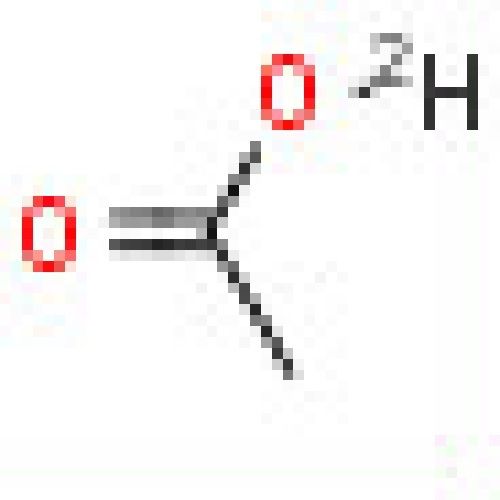
Chemical Name: Aceticacid-d
Synonyms :deuterio acetate
| MonodeuteroaceticAcid | Acetic acid-d1
Cas No : 758-12-3
Purity : 98%
MolecularFormula : C2H3DO2, Molecular Weight : 61.1
Appearance:LiquidHigh Isotopic Purity for Advanced ResearchAcetic acid-d, with a minimum deuterium content of 98 atom % D, is ideal for precise scientific investigations requiring isotopic labeling and NMR analysis. Its high chemical and isotopic purity ensures reliability in pharmaceutical and analytical research, supporting accurate and reproducible results.
Usage Across Scientific DisciplinesThis deuterated solvent finds application in NMR spectroscopy, isotopic labeling, and as a reagent or solvent in research and pharmaceutical settings. Researchers rely on its miscibility with water, alcohol, and ether, making it versatile for synthesizing labeled compounds and studying reaction mechanisms.
Safety and Storage ConsiderationsAcetic acid-d must be handled with care as it is highly corrosive and can cause severe skin burns or eye damage. It should be stored tightly sealed in a cool, dry, and well-ventilated area, away from incompatible materials. Proper safety precautions, including the use of protective gear, are essential.
FAQ's of Acetic acid-d:
Q: How should Acetic acid-d be stored to maintain its quality?
A: Acetic acid-d should be kept tightly closed in its original container, stored in a cool, dry, and well-ventilated place, away from incompatible materials. This ensures it maintains its chemical and isotopic purity, extending its shelf life to up to two years.
Q: What is the primary benefit of using deuterated acetic acid in research?
A: The main advantage is its high deuterium content (98 atom % D minimum), which enables accurate isotopic labeling, especially in NMR spectroscopy, facilitating detailed molecular studies and robust, reproducible scientific outcomes.
Q: When is Acetic acid-d typically used in laboratory settings?
A: Researchers use Acetic acid-d when conducting NMR spectroscopy, isotopic labeling experiments, or when a deuterated solvent or reagent is required for analysis and synthesis in pharmaceutical, chemical, or academic research.
Q: Where can Acetic acid-d be safely handled and utilized?
A: It should be handled in controlled laboratory environments equipped with appropriate safety measures, including gloves, goggles, and fume hoods, to prevent contact with skin or eyes due to its corrosive nature.
Q: What process should be followed in case of accidental skin or eye contact with Acetic acid-d?
A: If Acetic acid-d comes into contact with skin or eyes, immediately rinse the affected area with plenty of water for at least 15 minutes and remove contaminated clothing. Seek urgent medical attention due to its potential to cause severe burns and damage.
Q: How is Acetic acid-d beneficial for NMR spectroscopy?
A: Its deuterium-enriched structure minimizes interference in proton NMR spectra and serves as an internal standard or solvent, improving spectral clarity and accuracy in high-resolution NMR studies.






 Send Inquiry
 Send Inquiry
 Send SMS
 Call Me Free


