Product Description
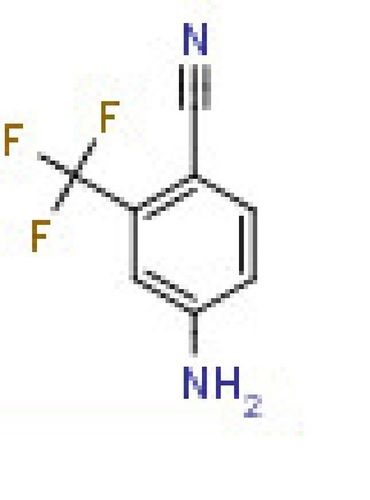
Chemical Name: 4-Amino-2-(trifluoromethyl)benzonitrile
Synonyms : 5-Amino-2-cyanobenzotrifluoride|
4-Cyano-3-trifluoromethylaniline|
4-Amino-2-trifluoromethylbenzonitrile|
Benzonitrile,4-amino-2-(trifluoromethyl)- |
4-cyano-3-(trifluoromethyl)aniline|
2-trifluoromethyl-4-aminobenzonitrile|
Bicalutamideaminobenzonitrile |
2-cyano-5-aminobenzotrifluoride
CAS No : 654-70-6
Purity : 98%
MolecularFormula : C8H5F3N2
Molecular Weight: 186.1
Appearance: Solid
Key Chemical Features and Benefits4-Amino-2-(trifluoromethyl)benzonitrile boasts high purity (>98%) and excellent chemical stability under normal conditions. Its unique structure, featuring both amino and trifluoromethyl groups, makes it valuable in pharmaceutical and agrochemical syntheses. The compound is non-poisonous and not classified as hazardous, offering safe handling when standard laboratory precautions are followed.
Storage and Handling RecommendationsFor optimal stability, store the compound in a cool (2-8C), dry, well-ventilated area. Packaging in HDPE bottles or aluminium bags protects against moisture and contamination. Wearing suitable protective clothing and gloves is recommended, even though the substance is not classified as hazardous. This ensures a safe and controlled working environment.
Versatile Applications in Chemical SynthesisWidely used as an intermediate in pharmaceutical and agrochemical production, 4-Amino-2-(trifluoromethyl)benzonitrile is suitable for research and synthesis of fine and specialty chemicals. Its solubility profile enables versatile use with various organic solvents, supporting innovation in drug discovery and industrial chemistry.
FAQs of 4-Amino-2-(trifluoromethyl) benzonitrile:
Q: How should 4-Amino-2-(trifluoromethyl)benzonitrile be stored to maintain its purity and stability?
A: The compound should be stored in tightly sealed HDPE bottles or aluminium bags at 2-8C, in a cool, dry, and well-ventilated area. This helps preserve its purity and ensures a stable shelf life of up to two years.
Q: What are the main applications of 4-Amino-2-(trifluoromethyl)benzonitrile?
A: This product is primarily used as an intermediate in the synthesis of pharmaceuticals, agrochemicals, and fine chemicals. It is also valuable in chemical research laboratories for creating specialty compounds.
Q: When should protective gear be used with this substance?
A: Protective clothing and gloves should always be worn when handling the compound, regardless of its non-hazardous classification. This practice promotes safety and prevents contamination during laboratory or industrial processes.
Q: Where can this chemical be sourced and in what packaging?
A: The compound is available in India from chemical suppliers and traders. It is typically provided in HDPE bottles or aluminium bags to maintain product integrity during storage and transport.
Q: What is the process for using this compound in chemical synthesis?
A: 4-Amino-2-(trifluoromethyl)benzonitrile is used as an intermediate, reacting with other chemicals in organic synthesis. It is typically dissolved in suitable organic solvents as part of multi-step procedures in pharmaceutical and agrochemical manufacturing.
Q: What are the benefits of using 4-Amino-2-(trifluoromethyl)benzonitrile in synthesis?
A: Its high purity, chemical stability, and unique structural properties enable efficient synthesis of target compounds. These features make it a reliable choice for researchers and manufacturers seeking consistent, high-quality outcomes.
Q: Is transportation of this compound regulated, and what is its hazard status?
A: Transport of 4-Amino-2-(trifluoromethyl)benzonitrile is not regulated, as it is not classified as hazardous or poisonous. Nevertheless, standard good practice should be followed to ensure safe handling during transit.






 Send Inquiry
 Send Inquiry
 Send SMS


