Product Description
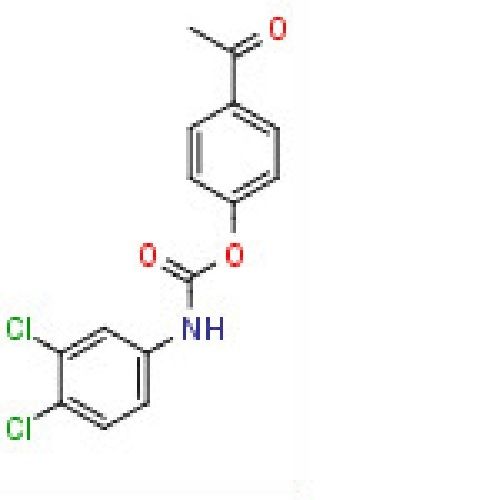
Chemical Name: 4-Acetylphenyl(3,4-dichlorophenyl)carbamate
Synonyms :4-acetylphenyl (3,4-dichlorophenyl)carbamate
| Carbamic acid, (3,4-dichlorophenyl)-, 4-acetylphenyl ester
|(4-acetylphenyl) N-(3,4-dichlorophenyl)carbamate
Cas No : 85221-17-6
Purity : 95%
MolecularFormula : C15H11Cl2NO3
Molecular Weight :324.2Reliable Stability and SafetyThis compound exhibits excellent stability when stored in a sealed HDPE bottle at 2-8C, away from light and moisture. Not classified as hazardous for transport and not acutely toxic, it is a safe choice for pharmaceutical and chemical research. Its solid crystalline form and mild characteristic smell make handling easier and more predictable.
Purity and Quality AssuranceManufactured to pharmaceutical grade standards, this product boasts a minimum purity of 98% as verified by HPLC. The presence of impurities never exceeds 2%, ensuring reliability for synthesis applications. Standard test methods include HPLC and proton/carbon NMR to confirm quality and composition before use.
Product Applications and BenefitsWidely utilized as an intermediate in pharmaceutical synthesis and chemical research, this compound offers versatility in the creation of novel pharmaceutical compounds. Its extended shelf life of two years and compatibility with standard transport regulations make it a practical and dependable choice for laboratories and research facilities.
FAQ's of 4-Acetylphenyl (3,4-dichlorophenyl) carbamate:
Q: How should 4-Acetylphenyl (3,4-dichlorophenyl) carbamate be stored for optimal stability?
A: It should be stored at 2-8C in a tightly closed container, protected from light and moisture. This maintains its stability and ensures a minimum shelf life of two years.
Q: What is the recommended usage for this compound in a laboratory setting?
A: This compound is primarily used as an intermediate for the synthesis of pharmaceutical compounds and in chemical research environments due to its high purity and reliable properties.
Q: When is the product tested for purity and quality, and by which methods?
A: Purity and quality are tested using HPLC and proton/carbon NMR methods before shipment, ensuring the product meets pharmaceutical-grade standards with less than 2% total impurities.
Q: Where can I find detailed compatibility information for this chemical?
A: Compatibility details are provided in the documentation and product labeling. It is important to avoid exposure to strong oxidizers and acids, as decomposition may occur under such conditions.
Q: What process should be followed for safe transport and handling of this material?
A: While not classified as hazardous for transport, standard chemical handling and transportation regulations should be followed, including using sealed HDPE packaging and avoiding excessive light or moisture exposure.
Q: What benefits does using this pharmaceutical intermediate offer to researchers and manufacturers?
A: Its high purity, consistent quality, and stable properties under recommended storage make it a reliable choice, facilitating efficient synthesis of pharmaceutical compounds and supporting advanced chemical research.






 Send Inquiry
 Send Inquiry
 Send SMS


