Product Description
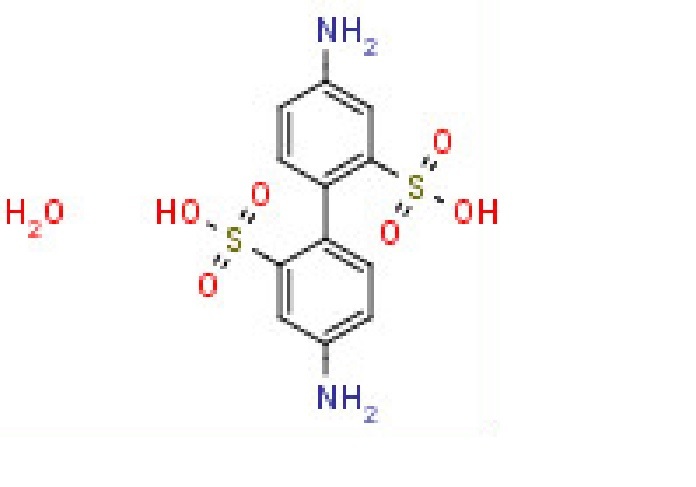
Chemical Name:4,4'-Diaminobiphenyl-2,2'-disulfonic acid hydrate
Synonyms : Benzidine-2,2'-disulfonicacid
CAS No : 117-61-3
Purity : 70%
Molecular Formula : C12H12N2O6S2.H2O
Molecular Weight : 362.4
Appearance: SolidVersatility in Industrial ApplicationsDSD Acid is a critical intermediate in the synthesis of fluorescent whitening agents and azo dyes, supporting the textile, paper, and pharmaceutical industries. Its exceptional chemical stability enhances process reliability, while its high purity ensures consistent product quality for end-use formulations.
Safe and Convenient HandlingThis compound is classified as non-hazardous and is not flammable or poisonous, making it straightforward to handle and store. Packed in robust HDPE drums, it benefits from simple storage requirements: keep containers tightly closed and in a dry place at ambient temperature for optimal shelf life and stability.
Reliable Supply from Leading Indian TradersSupplied by reputable traders in India, DSD Acid meets strict industrial-grade standards. With a minimum purity of 98%, customers can rely on steady, high-quality deliveries tailored to project needs. Packaging customization and prompt dispatch support efficient manufacturing processes.
FAQ's of 4,4'-Diaminobiphenyl-2,2'-disulfonic acid hydrate:
Q: How is 4,4-Diaminobiphenyl-2,2-disulfonic acid hydrate used in industry?
A: This compound serves primarily as an intermediate in the production of fluorescent whitening agents and azo dyes, and is occasionally utilized in pharmaceutical synthesis. Its stability and solubility make it highly suitable for these chemical processes.
Q: What are the storage and transport guidelines for DSD Acid?
A: Store DSD Acid in a tightly closed container in a dry place at ambient temperature. During transport, ensure containers remain sealed and dry. The compound is not hazardous and does not require a UN number or special hazard classifications.
Q: When does DSD Acid decompose, and what is its melting or boiling point?
A: DSD Acid decomposes upon heating above 300C and does not exhibit a standard boiling point. It should be kept away from excessive heat to avoid decomposition.
Q: Where is DSD Acid commonly sourced or supplied from?
A: Reputable chemical suppliers and traders in India provide DSD Acid, often catering to global markets with packaging options like 25 kg HDPE drums or as per specific customer requirements.
Q: What benefits does DSD Acid offer over similar compounds?
A: DSD Acid stands out for its high purity, excellent solubility in water, chemical stability under normal conditions, and classification as non-hazardous, making it safer and more reliable for manufacturing processes.
Q: Which incompatible materials should be avoided when handling DSD Acid?
A: You should avoid contact between DSD Acid and strong oxidizing agents, as these can induce unsafe reactions or degrade the product.
Q: Can you describe the typical appearance and physical properties of DSD Acid?
A: DSD Acid appears as a white to off-white, odorless crystalline powder that is freely soluble in water and is not flammable or poisonous. Its acidic pH and stable form make it suitable for many industrial applications.






![N-(2-(4'-Cyano-[1,1'-biphenyl]-4-yl)propyl)propane-2- sulfonamide](https://cpimg.tistatic.com/10781673/b/4/N-2-4-Cyano-1-1-biphenyl-4-yl-propyl-propane-2-sulfonamide.jpg?tr=w300)
 Send Inquiry
 Send Inquiry
 Send SMS


