Product Description
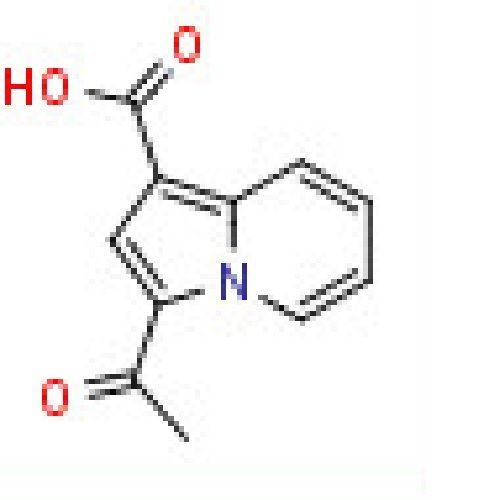
Chemical Name: 3-Acetylindolizine-1-carboxylicacid
Synonyms :1-Indolizinecarboxylic acid, 3-acetyl-
| 3-Acetylindolizine-1-carboxylicacid
Cas No : 120221-69-4
Purity : 95%
MolecularFormula :C11H9NO3
Molecular Weight :203.2Primary Applications and Benefits3-Acetylindolizine-1-carboxylic acid serves as a key intermediate for synthesizing various heterocyclic compounds, making it invaluable in pharmaceutical and chemical research. Its high purity (98%) and reliable analytical grade ensure dependable results. Researchers benefit from its compatibility with most organic solvents and stable performance, simplifying experimental design and synthesis workflows.
Safe Handling and Storage RecommendationsThe compound is classified as non-poisonous and generally safe for routine laboratory handling. For maximum stability and shelf life (up to 24 months), store the substance in a sealed container in a cool, dry, and well-ventilated area, away from direct light. Its non-regulated transport status allows for hassle-free shipping and handling. No special hazard precautions are required under normal laboratory conditions.
FAQ's of 3-Acetylindolizine-1-carboxylic acid:
Q: How should 3-Acetylindolizine-1-carboxylic acid be stored to maintain its stability?
A: It should be kept in a cool, dry, and well-ventilated area, away from direct light, ideally in sealed containers. Proper storage can ensure a shelf life of up to 24 months.
Q: What is the recommended method for identifying 3-Acetylindolizine-1-carboxylic acid?
A: The compound can be identified and characterized using spectroscopic techniques such as NMR, IR, and MS spectroscopy, which confirm its purity and structural attributes.
Q: When is it beneficial to use 3-Acetylindolizine-1-carboxylic acid in research or synthesis?
A: It is particularly advantageous in projects involving the synthesis of heterocyclic compounds or pharmaceutical intermediates, thanks to its high purity and compatibility with various organic solvents.
Q: Where can 3-Acetylindolizine-1-carboxylic acid be applied or utilized?
A: This chemical is mainly used in pharmaceutical intermediate synthesis and broader chemical research, especially where analytical-grade reagents are required for accurate results.
Q: What is the process for dissolving this compound for laboratory use?
A: Dissolve it in organic solvents such as DMSO or DMF for most applications. Stirring or gentle heating may be used if faster dissolution is desired. It's only slightly soluble in water.
Q: Is there any special transportation requirement for this chemical?
A: No, 3-Acetylindolizine-1-carboxylic acid is classified as non-regulated for transport and can be shipped in sealed containers without special handling requirements.
Q: What are the main benefits of choosing this compound for analytical or research purposes?
A: Researchers value its high purity (98%), moderate polarity, robust stability, and ease of dissolution in organic solvents, streamlining both synthesis and analysis steps.






 Send Inquiry
 Send Inquiry
 Send SMS
 Call Me Free


